Showing posts with label st. peter-ad-vincula. Show all posts

Lady Margaret Pole

The death of Lady Margaret Pole, Countess of Salisbury, stands out in a brutal and bloody reign as one of its more terrible moments. To put it simply, she was brutally killed because Henry VIII couldn't take his wrath out on her son, and her execution was like a horror movie.

Lady Margaret was born in 1473 to George, Duke of Clarence and his wife, Isabel Neville. George was the brother of King Edward IV, but their relationship was strained at best, especially in regards to Elizabeth, the king's wife. Margaret's early years were tumultuous, as the Wars of the Roses tore through her family. Her grandfather was killed while fighting against her uncle Edward IV.

When Margaret was only three years old, her mother gave birth to a boy they named Richard, after his uncle. Isabel had apparently suffered from difficult pregnancies in the past, but she seemed to be recovering from this latest birth, though baby Richard was "sickly" according to later court records. Isabel remained under the care of a midwife named Ankarette Twynyho, who nursed the mother and baby with herbal concoctions. About ten weeks after the birth, Isabel fell violently ill, supposedly after drinking ale given to her by Ankarette, and died three days before Christmas. Baby Richard died shortly thereafter.

Margaret's father, George, was crushed by grief and was convinced Isabel and Richard had been poisoned by Ankarette at the behest of his enemy, Queen Elizabeth Woodville. George tracked Ankarette down in April, had her charged with poisoning Isabel, and accused a man named John Thuresbury of poisoning the infant. Both of them were swiftly convicted and hanged.

The king decided he'd had enough of his brother's behavior and wild allegations against the queen. His agents arrested several of George's retainers, who confessed under torture to using black magic to try to kill the king. When George made a stink about their innocence in parliament, the king had him arrested and thrown into the Tower.

Instead of humbly throwing himself on the mercy of the king, George slandered his brother's marriage to Elizabeth Woodville, claiming it was bigamous, and set out to arrange a powerful marriage of his own that might have put his brother's crown at risk.

The king demanded parliament pass a Bill of Attainder against his brother for treason, which they did. Following it, George was "privately executed" within the confines of the Tower. The old stories have it that he was drowned in a barrel of wine.

After George's execution, Margaret found herself stripped of her inheritance, and sent to live with her aunt. When she was ten years old, her uncle, Edward IV died, and her uncle Richard III, took the throne. He declared that since George had been attainted for treason, his children were ineligible as heirs to the throne.

Only a few years later, Richard III was defeated at the Battle of Bosworth. The Tudor dynasty had begun. The new king Henry VII and decided to marry Margaret to his cousin, Sir Richard Pole. We don't know the exact year of their marriage, but it was probably around 1487, which would make Margaret about fourteen years old at time. Sir Richard was around twenty-eight or twenty-nine.

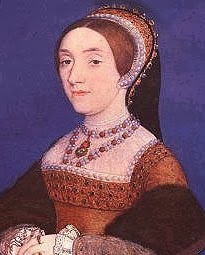
Margaret was described as tall for a woman, slender and elegant, with the auburn hair of the Plantagenets, and pale skin. We don't have a portrait of her that can be identified for certain.

Margaret and Sir Richard seem to have had a happy - or at least stable - marriage. They had five children together, and Sir Richard held a variety of highly-favored positions in the new king's court. Margaret was assigned as a lady in waiting to Katharine of Aragon, who had wed the king's son, Arthur. Her behavior as a courtier was impeccable, with never a hint of scandal attached to her name. She and Katharine became close friends in the short time they were together.

While she was pregnant with her son, Reginald, Margaret's brother - seen by many as the rightful heir to the throne - was executed after the uprising by Perkin Warbeck. His only crime, it was said, was his royal blood. Margaret never held it against Katharine that her own parents had urged the king to execute Margaret's brother to secure the throne.

When Arthur died in 1502, Katharine's household was dissolved, and Margaret was sent back to her own estates, while the widowed Katharine was at the mercy of her father-in-law, bickering over her dowry with Spain.

Only two years later, Sir Richard died, leaving Margaret a widow with only a small income from her jointure. She couldn't even pay for her husband's funeral; the king loaned her the funds on generous terms. Out of desperation, Margaret dedicated her younger son, Reginald, to the church, so she could save money on his upbringing and education. Reginald did well in the church, rising so high that he was once considered for the office of pope, but he seems to have resented his mother for it. He once wrote to Margaret, chiding her for her lack of care for him:


And though you had so done with all your children, yet in me you had so given all right from you and possession utterly of me that you never took any care to provide for my living nor otherwise, as you did for other, but committed all to God, to whom you had given me. This promise now, Madam, in my [Maister]es name I require of you to maintain, [the wh]iche you cannot keep nor make good if y[ou] now beginne to care for me.


When Henry VIII came to the throne, Margaret's situation improved. He allowed her to buy back the Earldom of Salisbury, which gave her income from its properties. It made her the only woman in England to hold a peerage in her own right until Anne Boleyn was created Marquess of Pembroke. Margaret managed those lands carefully and became a very wealthy woman.

Margaret was also re-appointed to serve Katharine of Aragon after the king married her. Katharine must have been joyful to have her dear friend back in her company. They had much in common, considering the struggles they had both endured.

Both women were deeply pious. Henry called Margaret "the most saintly woman in Christendom," and said he "honored and loved her as his own granddame." Katharine chose Margaret to be the godmother of her daughter, Princess Mary, and later made her the child's governess.

Margaret's own children did well at court. Her eldest son, Henry, became a baron and served in the House of Lords. Arthur Pole became a gentleman of the privy chamber, though he died young. Her daughter, Ursula, married the son of the Duke of Buckingham, and Geoffrey Pole married an heiress.

Reginald, the son dedicated to the church, studied at Oxford, where he obtained a degree at age fifteen. Henry VIII himself sponsored Reginald to study at Padua, and the young man began collecting offices and benefices, though he had not yet taken vows as a priest. He seems to have been extremely gifted, corresponding with the great humanist scholars of the age, including Erasmus and Thomas More. For a time, it seems Katharine considered marrying Reginald to her daughter, since he had not yet taken his vows.

Then, in 1527, Henry began to pursue an annulment of his marriage to Katharine of Aragon so he could marry Anne Boleyn. Margaret took the side of her friend, Katharine, and of the princess she loved like a daughter.

Reginald initially helped speak to scholars in Rome about the annulment, but ultimately decided the king was wrong in his determination to marry Anne. Henry asked him to come back to England to take the offices of the Archbishop of York and the See of Winchester. Reginald saw it as a bribe to gain his support of the Boleyn marriage. He spoke to Henry in person, and whatever it was he said to the king made him so angry that Henry is said to have laid his hand on his dagger.

It can be imagined from what Reginald wrote in his scathing letter laying out the gross hypocrisy of Henry wanting to divorce his wife because she had been the widow of his brother, in order to marry a woman who was the sister of his former mistress. In the eyes of the church, it was equally incestuous.

Now what sort of person is it whom you have put in the place of your divorced wife? Is she not the sister of her whom first you violated? And for a long time after kept as your concubine? She certainly is. How is it, then, that you now tell us of the horror you have of illicit marriage? Are you ignorant of the law which certainly no less prohibits marriage with a sister of one with whom you have become one flesh, than with one with whom your brother was one flesh? If the one kind of marriage is detestable, so is the other. Were you ignorant of this law? Nay, you knew it better than others. How do I prove that? Because, at the very time you were rejecting your brother’s widow, you were doing your utmost to get leave from the pope to marry the sister of your former concubine.


Henry cast Katharine and Princess Mary into exile. He removed Margaret from her post as Mary's governess, though Margaret begged to be allowed to stay, even offering to host Mary's household at her own expense. But Henry believed the pious Margaret was one of those who was encouraging Mary to be "stubborn" about refusing to accept her father's stance that his marriage to Katharine was invalid.

Chapuys even once went to plead with Henry to allow Mary to resume living with Margaret, but the king's affection and esteem for Margaret was gone.


I did not wish to dispute with him on the subject, but asked that he would at least put the Princess under the care of her old gouvernante, the countess of Salisbury, whom she regarded as her second mother. He replied that the Countess was a fool, of no experience, and that if his daughter had been under her care during this illness she would have died, for she would not have known what to do
[.]

Safe on the Continent, Reginald denounced the king's marital machinations, writing a book about the case. Margaret did the only thing she could - she denounced her son as a traitor, and wrote him a letter chastising him for his "folly."


"Son Reginald," I send you God's blessing and mine, though my trust to have comfort in you is turned to sorrow. Alas that I, for your folly, should receive from my sovereign lord "such message as I have late done by your brother." To me as a woman, his Highness has shown such mercy and pity as I could never deserve, but that I trusted my children's services would express my duty. And now, to see you in his Grace's indignation,—"trust me, Reginald, there went never the death of thy father or of any child so nigh my heart." Upon my blessing I charge thee to take another way and serve our master, as thy duty is, unless thou wilt be the confusion of thy mother. You write of a promise made by you to God,—"Son, that was to serve God and thy prince, whom if thou do not serve with all thy wit, with all thy power, I know thou can not please God. For who hath brought you up and maintained you to learning but his Highness?" Will pray God to give him grace to serve his prince truly or else to take him to his mercy.


Margaret had no choice but to denounce Reginald. To do anything else would be to endanger herself and her family. Even though she likely agreed with all he was saying, to not denounce it publicly would be suicide. It was a terrible and agonizing choice for a mother - and a faithful Catholic - to make.

Even after Anne's execution, the king still insisted that his marriage to Katharine had been invalid and was enraged by Reginald's refusal to acknowledge the royal supremacy. It's said he tried unsuccessfully to have Reginald assassinated at one point. Reginald was now a Cardinal (despite not having taken vows) and was urging the other monarchs of Europe to depose Henry and install a Catholic government in England.

The enraged king, unable to strike at Reginald himself, began arresting his relatives. Anyone known to have corresponded with Reginald was sent to the Tower. In November of 1538, after the failed uprising known as the Pilgrimage of Grace, Margaret herself was arrested. Her houses and property were searched for any possible evidence of treasonous activities, and she was brutally interrogated for hours on end.

Eventually, Cromwell produced a silk robe that was embroidered with the arms of England, marigolds (a symbol of Princess Mary), pansies (a symbol of the Pole family) and the five wounds of Christ (a symbol of the Pilgrimage of Grace.) Cromwell believed it demonstrated Reginald's intentions to marry Mary and restore papal authority in England.

Considering the robe wasn't produced until six months after her possessions had been searched, many today believe it was planted. Margaret was convicted as a traitor by an Act of Attainder. Her eldest son, Henry, was executed, and her son Geoffrey had been forced to testify against him. He was pardoned for his cooperation and fled the country. Geoffrey, it seems, carried the heavy burden of this betrayal on his conscience and wasn't able to free himself of its weight until he was later pardoned in person by the pope.

Margaret was imprisoned in the Tower for over two years, and there she was left to wait to see if she would be pardoned or the death sentence would be carried out. She was housed as a noble in one of the better cells, with the comforts of fine furniture and the like, but she was an elderly lady in her seventies who suffered badly during the winters in its stone rooms. The young queen Katheryn Howard took pity on her and sent her fur-lined clothing.

Around Easter, there was another small pro-Catholic uprising, and as it turned out, one of the ringleaders was a relative of the Nevilles, the family of Margaret's mother, Isabel. Henry may have believed it was egged on by Reginald Pole. He decided it was time to get rid of Margaret once and for all.

On the morning of May 27, 1541, Margaret was awakened and informed she was to die in a few hours' time.

Henry had learned from the execution of Anne Boleyn and wanted to limit the number of witnesses. Likely, this is why the execution was carried out suddenly, not even building a scaffold to alert people an important person was to be executed. Henry knew that the sad spectacle of this elderly, pious woman climbing the scaffold wouldn't have the deterrent effect he wanted, but would instead reflect badly on him.

Chapuys wrote to the Queen of Hungary about the execution that followed. His is the fullest description we have of the event, and though his biases are well-known, it seems the most likely to be an accurate account:


About the same time, the very strange and lamentable execution of Mme. de Salisbury, the daughter of the duke of Clarence, and mother of Cardinal Pole, took place at the Tower in the presence of the Lord Mayor of London and about 150 persons more.
At first, when the sentence of death was made known to her, she found the thing very strange, not knowing of what crime she was accused, nor how she had been sentenced; but at last, perceiving that there was no remedy, and that die she must, she went out of the dungeon where she was detained, and walked towards the midst of the space in front of the Tower, where there was no scaffold erected nor anything except a small block.

Arrived there, after commending her soul to her Creator, she asked those present to pray for the King, the Queen, the Prince (Edward) and the Princess
[Mary], to all of whom she wished to be particularly commended, and more especially to the latter, whose god-mother she had been. She sent her blessing to her, and begged also for hers.

After which words she was told to make haste and place her neck on the block, which she did. But as the ordinary executor of justice was absent doing his work in the North, a wretched and blundering youth (garçonneau) was chosen, who literally hacked her head and shoulders to pieces in the most pitiful manner.


As ghastly as Margaret's demise was, an even more horrible tale has become the popular legend. It originates in 1649, in another account of Margaret's execution: (Modernized spelling and punctuation.)

Shortly after followed the Countess of Salisbury's execution, which, whether occasioned by the late rebellion (as being thought of Cardinal Pole's instigation) or that she gave some new offence, is uncertain. The old lady being brought to the scaffold (set up in the Tower) was commanded to lay her head on the block, but she (as a person of great quality assured me) refused, saying, "So should traitors do, and I am none." Neither did it serve that the executioner told her it was the fashion. So turning her gray head every way, she bid him, if he would have her head, to get it as he could. So that he was constrained to fetch it off slovenly. And thus ended (as our authors say) the last of the right line of the Plantagenet.
The tale is unlikely for several reasons. It doesn't fit in with what we know of the expected behavior of Tudor nobles facing execution. Even the innocent submitted with grace to the will of the king. Dying with dignity was a point of pride. Margaret's supposed defiance may seem brave to modern readers, but it would have been shameful in the Tudor era, when nobles were expected to make a pious, Godly end of submission and prayer. Secondly, Margaret was an ill and elderly woman, unlikely to be spry enough to make an executioner chase her.

In the end, Chapuys seems most likely to be right about what happened. We know of other executions of the era which were terribly botched, causing unnecessary suffering to the condemned. So the tale of Margaret's sad and bloody end may be true. If the execution was ordered suddenly, there would have been no time to erect the scaffold. There also may have been no time to send for an experienced headsman to execute Margaret. The woman Henry had once said he "loved and honored as his own granddame" suffered a hasty, botched execution in front of only a handful of witnesses.

Margaret had constructed a lovely chantry chapel she intended for her burial site, but she was buried beneath the floor of St. Peter-ad-Vincula, near the grave of Anne Boleyn.


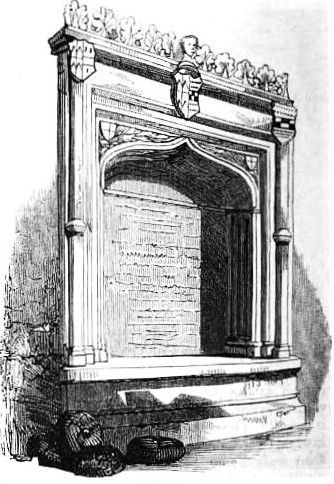
She was Lady of the manor of Christchurch, in Hampshire, and had erected in that church on the north side of the altar the elegant chapel, still called the Salisbury chapel, for her own burial-place. In the central boss of the fan tracery of the roof is a representation, much mutilated, of the Trinity, with the figure of the Countess in front, kneeling at the feet of God the Father. The armorial bearings of the Countess were on the eastern boss, and below can still be read her motto "Spes mea in deo est."
The commissioners for the suppression of monasteries reported, "in thys churche we founde a chaple and monument curioslie made of Cane stone, paryd (prepared) by the late mother of Regnold Pole for herre buryall, whiche we have causyd to be defacyd, and all the arms and badgis clerly to be deleted:" and in this condition does the chapel remain at the present time.
During the repairs in 1834, two receptacles for coffins were discovered below the floor of this chapel, which were probably intended for the countess, and her son the cardinal, but seemed never to have been used.


In the Victorian era, the chapel of St. Peter-ad-Vincula was renovated and remains were found that were thought to belong to Margaret.


Close by, somewhat in a south-east direction, and nearer to the wall of the chancel, gathered together in two distinct groups, were found the bones of two females; these were examined and carefully sorted, they appeared to belong to a person of about thirty to forty years of age, and to another who must have been considerably advanced in years. It is worthy of note that these latter remains were a little to the south-east of the younger female. 
These groups had been much disturbed, and many bones are missing: the younger female had been of rather delicate proportions, the elder had been tall, and certainly of above average height.
These remains are believed to be those of Lady Rochford and Margaret of Clarence, Countess of Salisbury: and, as was subsequently discovered, they had been removed somewhat to the east of their original resting places, in order to make room for two unknown persons, who had been buried close to the step of the chancel, probably about one hundred years ago. [...] A broken tobacco pipe of the 17th century and a fragment of silk were found between this body, and the supposed remains of Lady Rochford and the Countess of Salisbury.

 In 1886, Margaret was beatified by Pope Leo XIII as one of the English Martyrs to the Catholic faith. May 28 is her feast day. StumbleUpon Share on Tumblr

Did Elizabeth I Ever Visit Anne Boleyn's Grave?

Elizabeth wearing one of her mother's
initial pendants, a letter "A"
Queen Elizabeth I seems to have had an aversion to tomb-building. Unlike most long-lived monarchs, she never began building her own tomb in her lifetime. Nor did she ever build the tomb her predecessor, Mary, asked for in her will (which Mary wanted to share with Katharine of Aragon, who never got a tomb, either.) Nor did Elizabeth build one for her little brother, the short-lived King Edward VI, or finish constructing the tomb for her father, Henry VIII. So, perhaps it's not surprising she never moved her mother from her grave in the chapel floor of St. Peter-ad-Vincula in the Tower of London.

From the ring she always wore that secretly concealed her mother's portrait, and the favor she showed her maternal relatives, Elizabeth held her mother's memory in honor, though she could never publicly speak about Anne Boleyn. To decree that her mother was innocent would be to defy her father, and the justice system as a whole. Some of the lords on the jury that condemned Anne were still living, and to say their verdict was unjust would be to call their integrity into question. It was a can of worms Elizabeth just couldn't open.

Courtesy of Findagrave.com
Though she never built a better tomb for her mother, did Elizabeth ever visit Anne Boleyn's grave in the Tower?

When Elizabeth was a prisoner there under the reign of her sister, she probably was never given the opportunity. There is some debate as to whether she was imprisoned in the Bell Tower or the royal apartments (which are no longer extant.)

In either case, she was eventually given a small measure of liberty to walk around the top of the wall or in the garden behind the royal apartments, but she would not have been allowed to walk all the way across the Green to the chapel. She would not even have been able to see the chapel, if she was lodged in the queen's apartments.
Map of the Tower of London in Elizabeth's day
with locations marked in color
The royal apartments are marked in red
The Coldharbor Gate is marked in green
The Bell Tower is marked in purple
St. Peter-ad-Vincula is marked in blue
The site of the scaffold would have
been to the right of the blue arrow

As queen, Elizabeth only stayed at the Tower of London a few times, probably because of its ugly memories and association. She stayed for a several days when she took symbolic possession of the Tower upon ascending to the throne in late November, 1559 and then the night before her coronation ceremony, as was the tradition. She left on the morning of her coronation and to my knowledge, never returned.

We have no record of Elizabeth ever visiting the chapel of St. Peter-ad-Vincula, but that's not certain proof that she didn't. But it wouldn't ordinarily be a place that a king or queen would go, and so it would have required a special trip, and thus been notable.

Elizabeth would not have attended religious services St. Peter-ad-Vincula, which was essentially a parish church for the soldiers, servants, and their families. The royal family worshipped at the Chapel of St. John on the second floor of the White Tower, or Elizabeth could have a private service in the chapel of the royal apartments (where Anne Boleyn received her last communion).

St. Peter-ad-Vincula was on the other side of the Tower from where the royal apartments were located, which meant a quiet private visit could not be accomplished. To get there, Elizabeth would have had to march past the Jewel House with its staring guards, through the Coldharbor Gate, across the wide expanse of the Green, trailing a large herd of ladies-in-waiting and curious courtiers. It would have caused a stir of gossip, something Elizabeth was trying hard to avoid.

With these factors in mind, it's unlikely Elizabeth ever visited Anne Boleyn's grave. But she honored her mother's memory in many other ways.


StumbleUpon Share on Tumblr

The Fall of Katheryn Howard


In early November of 1541, the king was passed a note after mass. His councilors were so afraid of his reaction to its contents that they couldn't bring themselves to inform him in person.

Unlike Anne Boleyn, when Henry was told that Katheryn might be having an affair, he said the matter "might be forged," and demanded an investigation into the matter. He was troubled, but did not denounce his young queen and send her to the Tower.

Henry had married Katheryn Howard on July 28, 1540. He called her his Rose Without A Thorn. Katheryn was very young, possibly only sixteen or seventeen when she married the king. But Henry's rose had lived a very eventful life before she came to the king's attention as a lady in waiting for the wife he would soon divorce, Anna von Kleefes.

Katheryn had been raised by her grandmother, the Dowager Duchess of Norfolk, Agnes Tilney Howard. The Dowager Duchess ran something like a boarding school for young, aristocratic women. They lived in a dormitory-style room, and were given the usual education of a Tudor girl of gentle birth: dancing, music, reading and writing. However, the supervision of these young ladies seems to have been somewhat lax.

In about 1535, the Dowager Duchess hired Henry Mannox to teach Katheryn to play the virginals. Katheryn could have been no more than twelve or thirteen at this time, which today would put the entire situation in a different light. But in those days, Katheryn was considered a woman, old enough to marry. (King Henry's grandmother, Margaret Beaufort, had her first - and only - child at age thirteen.)

Mannox later said he fell in love with the young Katheryn, and she returned his affections. Their budding relationship - if you wish to call it that - moved to the physical when Katheryn "suffered" him to touch the intimate parts of her body. Mannox bragged about it - crudely - to Mary Hall:

“I know her well enough, for I have [touched her intimately] and I know [her body] among a hundred… And she loves me and I love her, and she hath said to me that I shall have her maidenhead, though it be painful to her, and not doubting but I will be good to her hereafter.”

Mannox also claimed he knew of a mark on her private parts, but was adamant in his later testimony that they had never had full sexual relations.

The affair was discovered by the Dowager Duchess when she caught the two alone together. It's mentioned in the trial records that she slapped Katheryn two or three times and ordered her never to be alone with the music teacher again.

In 1538, Francis Dereham came to serve at the Dowager Duchess's household. Along with other young gentlemen, he would sneak into the maidens' dormitory, aided by Katheryn, who crept into the Dowager Duchess's chamber and stole the keys. The young men brought fruit and wine "and other things to make good cheer."

There was a marked difference between Katheryn's affair with Mannox and the one she had with Dereham. They called one another "husband" and "wife" during these meetings. The other girls testified to witnessing the physical consummation. According to church and civil law, the pair were legally married. Katheryn was even tasked with holding money for him when he was away on business.

These meetings came to an abrupt halt when a jealous Mannox wrote a letter to the Dowager Duchess, telling her that she would be "displeased" if she visited the maiden's chamber late at night. Agnes stormed in one evening. What punishment the Dowager Duchess meted out to the girls is not recorded, but an angry Katheryn stole the letter and showed it to Dereham. Dereham confronted Mannox about it and called him a knave.

Katheryn said in her confession that the affair with Dereham ended about a year before her appointment to serve the new queen, Anna von Kleefes, as a lady in waiting. The Dowager Duchess must have sighed with relief to have her difficult charge off her hands.

While she was at court, Katheryn may have begun a flirtation with a young courtier, a favorite of King Henry. His name was Thomas Culpepper, and he was Katheryn's seventh cousin.

Culpepper was said to be very handsome and charming. Henry appointed Culpepper as a groom of the bedchamber around 1535, during the reign of Anne Boleyn. Culpepper helped to dress the king, and slept in the king's bedchamber.

It's possible that Culpepper had a darker side. Records indicate that a Thomas Culpepper was pardoned by the king for raping a park keeper's wife and slaying a man who tried to rescue her. However, Culpepper had an older brother who was also named Thomas Culpepper, so it can't be said for certain which brother it was.

Culpepper was one of the men sent to fetch the king's new bride, Anna von Kleefes. The king was unhappy in the marriage from the start and his roving eyes turned to one of her ladies, the young, pretty Katheryn. Soon, Anna was sent away with an annulment in hand, and Henry married Katheryn only eighteen days later.

At this point in his life, Henry was obese, and had a festering leg wound that wouldn't heal. By the standards of his day, he was an old man. Not exactly the man of Katheryn's dreams, but she was a Howard girl, and the duty of every young woman of the day was to marry well and bring honor to her family. The Howards seem not to have known about - or decided to deny - her marriage to Dereham, and Katheryn didn't tell the king about it when he approached her. Instead of being married off to some minor courtier due to her sullied reputation, Katheryn was climbing to impossible heights. In retrospect, she seems to have been doomed to fall.

On August 8, 1540, Katheryn Howard was presented as queen to the court. Henry lavished gifts on his young bride, whom he called "the very jewel of womanhood." His records indicate he spent more on her than he had on any of his previous queens, though Katheryn was only his wife for a short eighteen months.

But Katheryn's past quickly came back to haunt her. Francis Dereham appeared, perhaps sent by the Dowager Duchess, to ask for an appointment to court. Katheryn made him her secretary. Was she being blackmailed? We don't know, but it doesn't seem like she was happy with the arrangement. Dereham quickly became jealous of Culpepper, whom he said had succeeded him in Katheryn's affections.

Culpepper, too, was seething. The Spanish Chronicle states Culpepper was so grieved over Katheryn's marriage to the king that he fell ill over it. He sighed and cast longing looks at her when he was in her presence.

Katheryn wrote him a letter, delivered to him by Jane Parker, Lady Rochford. It's the only letter of hers that survives, and it was included in the evidence against her when the allegations of adultery came to light.

Jane Parker was the former sister-in-law of Anne Boleyn. She is traditionally blamed as being the one who condemned her husband and Anne to the scaffold by accusing them of incest, but there's no proof of her involvement in those particular accusations.

Jane Parker assisted the young queen in sending Culpepper messages and small gifts. She even arranged a few short meetings in her own bedchamber and an empty room. She scouted out locations for these meetings and reported to the queen where the back stairs could be found. It was later said she did these things in exchange for Katheryn finding her a new husband. But we cannot be sure of her motives.

There have been various theories down through the ages as to why Katheryn continued to meet with Culpepper after she married the king. Some suspect he was blackmailing her to remain silent about her past, or that Culpepper was trying to manipulate the young queen.

Perhaps it really was love. Katheryn does seem to have retained some affection for Culpepper because she referred to him at one time as her "sweet little fool," and her letter to him bemoans the fate she has that she cannot always be in his company.

The investigation quickly uncovered Katheryn's past and present entanglements. By the sixth of November, Katheryn knew she was in serious trouble. The council had been questioning her ladies and past acquaintances, and by now, the king knew all of the allegations against his thornless rose had not been "forged" after all. He abruptly left Hampton Court - Katheryn never saw him again. The following day, her jewels were seized, and Katheryn went into hysterics when Cranmer tried to question her.

I found her in such lamentation and heaviness, as I never saw no creature; so that it would have pitied any man’s heart in the world to have looked upon her: and in that vehement rage she continued, as they informed me which be about her, from my departure from her unto my return again.

He returned the next day and found her calmer and more cooperative. She made a humble confession in a letter written to the king, laying out her pre-marital affairs in detail. She begged for mercy.


But mercy was in short supply. The king was in an anguished rage, alternately roaring and crying. His reaction is a sharp difference from his cheerful demeanor after the accusations against Anne Boleyn. 

 Chapuys wrote:

"This King has wonderfully felt the case of the Queen, his wife... He has certainly shown greater sorrow and regret at her loss than at the faults, loss or divorce of his preceding wives."

The king ordered the Dowager Duchess imprisoned. Dereham and Culpepper went to the Tower. On the 11th, Katheryn was moved from Hampton Court to Syon Abbey. The king ordered her living conditions to be sharply reduced from what she was used to as queen. She had only six servants, and since her jewels had been seized, the only adornment she was allowed was a few hoods with gold trim, and six gowns.


“First, the King’s pleasure is, that the Queen, with convenient diligence, remove to the house of Syon, there to remain, till the matter be further ordered, in the state of a Queen, furnished moderately, as her life and conditions have deserved; that is to say, with the furniture of three chambers hanged with mean stuff, without any cloth of estate.”

She admitted in the interrogation that she had given Culpepper a cap with gold aglets and a chain. Norfolk wrote in his report:

She says that my Lady Rochford would at every lodging search the back doors & tell her of them if there were any, unasked; and since the progress she told her that when she came to Greenwich she knew an old kitchen where she might well speak with him. 


Katheryn paints Jane Parker as not only participating, but actively urging Katheryn to meet with Culpepper.
Culpepper tried to blame her too:

Lady Rochford contrived these interviews. The Queen would “in every house seek for the back doors and back stairs herself.” At Pomfret she feared the King had set watch at the back door, and lady Rochford made her servant watch in the court to see if that were so. [...] Lady Rochford provoked him much to love the Queen [ ...]

Jane, for her part, confessed that she believed Culpepper and the queen had been intimate.

Since her trouble the Queen has daily asked for Culpeper, saying that if that matter came not out she feared not. At Lincoln, when the Queen was with Culpeper, she was asleep until the Queen called her to answer Lovekyn. She thinks Culpeper has known the Queen carnally.

Why did Jane say that? Neither Katheryn or Culpepper ever admitted to a physical relationship. Such a thing would have been nearly impossible, given the brief, furtive nature of their stolen moments together. A queen was too closely watched by her ladies in waiting to escape them long. It was only because of the comparatively lax standards of a royal progress - most of the court had been dismissed while the king and queen were traveling - that the meetings were even possible. A whispered conversation behind a door, or a few minutes in an empty chamber was all they were ever able to have. But, in the end, it was enough to destroy them both.

Thomas Culpepper said that Katheryn had an almost superstitious fear of her husband's power as head of the church. She told him to not mention her in the confessional, lest the king hear it. God knows what pressures they put on Culpepper to confess. They likely didn't physically torture him, because of his noble blood, but it's certain his interrogation was heated. Culpepper ultimately confessed: 


"he intended and meant to do ill with the Queen and that in like wise the Queen so minded to do with him.”

That was enough to seal their doom as traitors.

On the 13th of November, the queen's household was dissolved, a very final and definitive gesture. The short reign of Katheryn Howard was over, one way or the other.

On the 22nd of November, the council decided it had enough evidence of the queen's guilt. They had spoken to Katheryn's roommates at the Dowager Duchess's house, Mannox, and Culpepper. They had found the letter Katheryn wrote to Culpepper. And Katheryn herself had written a confession of being what the king of France called "wondrous naughty."

The Duke of Norfolk, uncle of Katheryn and of Anne Boleyn, read the formal charges to her at Syon Abbey:

"My Lady Katheryn Howard. You have been charged with treason. The grounds for this charge is that you entered into marriage with His Royal Highness, King Henry VIII having knowledge of a previous betrothal to both Henry Mannox and Francis Dereham. It is also stated that you employed these persons, here at the Palace, with the full intention of continuing this sordid lifestyle. You have, not only brought shame upon your name, but have grievously sought to destroy His Majesty the King. It will be in your best interest to admit to these crimes and plead for his mercy."

Katheryn, displaying remarkable dignity for one so young, and under such terrible stress, replied:

"I am innocent of all charges and will never admit to these lies. If there is any ground of truth in these statements, then it is because of childish ignorance and the evil companions with whom I was formally surrounded. I also seek to state, that I am faithful to the King and would never wish harm upon him. I will seek his mercy, but not by admitting to these treacherous lies."


Katheryn would not admit she and Dereham had been pre-contracted or married. Maybe she knew it wouldn't save her anyway, even if she did admit to it. After all, her cousin, Anne Boleyn, had admitted to a pre-contract which allowed the king to annul their marriage, and was still beheaded a few days later. As it turned out, her cooperation was not required. Later that day, it was announced:


"[Katheryn] had forfeited her honour and should be proceeded against by law, and was henceforth to be named no longer Queen, but only Katheryn Howard."


On the first of December, Katheryn Howard was indicted:

That Katharine, queen of England, formerly called Kath. Howerd, late of Lambyth, Surr., one of the daughters of lord Edmund Howard, before the marriage between the King and her, led an abominable, base, carnal, voluptuous, and vicious life, like a common harlot, with divers persons, as with Francis Derham of Lambeth and Hen. Manak of Streteham, Surr., 20 and 24 May 32 Hen. VIII., and at other times, maintaining however the outward appearance of chastity and honesty. That she led the King by word and gesture to love her and (he believing her to be pure and chaste and free from other matrimonial yoke) arrogantly coupled herself with him in marriage.
And the said Queen and Francis, being charged by divers of the King's Council with their vicious life, could not deny it, but excused themselves by alleging that they were contracted to each other before the marriage with the King; which contract at the time of the marriage they falsely and traitorously concealed from the King, to the peril of the King and of his children to be begotten by her and the damage of the whole realm.
And after the marriage, the said Queen and Francis, intending to renew their vicious life, 25 Aug. 33 Hen. VIII., at Pomfret, and at other times and places, practised that the said Francis should be retained in the Queen's service; and the Queen, at Pomfret, 27 Aug. 33 Hen. VIII., did so retain the said Francis, and had him in notable favour above others, and, in her secret chamber and other suspect places, spoke with him and committed secret affairs to him both by word and writing, and for the fulfilling of their wicked and traitorous purpose, gave him divers gifts and sums of money on the 27 Aug. and at other times.
Also the said Queen, not satisfied with her vicious life aforesaid, on the 29 Aug. 33 Hen. VIII., at Pomfret, and at other times and places before and after, with Thos. Culpeper, late of London, one of the gentlemen of the King's privy chamber, falsely and traitorously held illicit meeting and conference to incite the said Culpeper to have carnal intercourse with her; and insinuated to him that she loved him above the King and all others. Similarly the said Culpeper incited the Queen. And the better and more secretly to pursue their carnal life they retained Jane lady Rochford, late wife of Sir Geo. Boleyn late lord Rochford, as a go-between to contrive meetings in the Queen's stole chamber and other suspect places; and so the said Jane falsely and traitorously aided and abetted them.

The same day, Culpepper and Dereham were tried for treason at the Guildhall and found guilty. The French ambassador wrote that he found it a little curious:


The personages before named were, five or six days ago, brought from the Tower into the great consistory of London, called Illehale(Guildhall), where the Mayor first, and beside him the Chancellor, Norfolk, Suffolk, and the rest of the Council, in presence of all who chose to attend, made anew the process of the said prisoners, and read aloud the Queen's signed deposition of what she had done with Durans before marriage, and her conversations with Colpepre. After both had been heard and examined they were condemned, Durans for having not only kept the lady from the time he violated her at the age of 13 until 18, but for having since been of her chamber and brought thither the woman who had been his accomplice before, which is presumptive evidence that they continued in their first purpose, especially as the Queen had said to lady Rochefort that if Colpepre would not listen to her there was, behind the door, another “qui ne demandoit pas meilleur party.” Colpepre had like sentence, although he had not passed beyond words; for he confessed his intention to do so, and his confessed conversations, being held by a subject to a Queen, deserved death.
Many people thought the publication of these foul details strange, but the intention is to prevent it being said afterwards that they were unjustly condemned. Another strange thing has been noted, viz., that Norfolk was at the judgment, and even in examining the prisoners laughed as if he had cause to rejoice.


Nine days later, Culpepper and Dereham met their end at the hands of the executioner. Culpepper, as a noble, was sentenced to simple beheading. He made a simple speech, repenting of his sins, and then knelt before the block. It was over in a moment.

As a commoner, Dereham was subject to the full horrors of a traitor's death. He was hanged until he was half-dead from strangulation, then cut down. His stomach was then sliced open, his entrails scooped out and thrown onto a bed of coals. Only after this agony was he beheaded. His body was then chopped into quarters, his head mounted beside Culpepper's on the Tower bridge, as a warning to others.

At some point, the king decided there would be no trial for Katheryn. She would be condemned by Bill of Attainder, which was introduced to Parliament on the 21st of January. It passed on February 11, and Katheryn's death was made law. It included what is probably one of the more unusual laws ever passed:


AND furthermore be it enacted for evading of such like heinous and abominable treasons, in case it fortune either the King our Sovereign Lord that now is or any of his successors hereafter being King of England, should take a fancy to any woman, of what estate degree or condition soever she be, either subject or resident within his Dominions or Realms, in way of Marriage, thinking and esteeming her a pure and clean maid, when indeed the proof may or after shall appear contrary either by due testimony or confession of the party or parties, and yet she nevertheless willingly do couple herself with her Sovereign Lord and King in marriage, without plain declaration before of her unchaste life unto his Majesty, that then every such offence shall be deemed and adjudged High Treason; and therein convicted by the Law shall have and suffer such pains of death, losses and forfeitures of land, tenants, goods, chattels, and debtors, as in cases of High Treason.


It continued that anyone knowing of unchaste behavior by the woman had to report it within twenty days of the marriage, or be guilty of misprison of treason.

Following it was a change to the law which allowed the king to execute insane persons; Jane Parker appeared to have gone mad, but she seems to have recovered before the end.

On February 10, one day before the bill became law, Katheryn and Jane were taken to the Tower. Reportedly, Katheryn struggled when she realized where they were taking her, but they forced her onto the boat. They would have floated down the Thames beneath the bridge where the heads of Culpepper and Dereham were impaled.

Katheryn was met at the Tower by her jailer, Sir John Gage. The previous man to occupy his position, Sir William Kingston, who tended Anne Boleyn before her execution, had died. Gage seems to have been of a kind temperament, because he treated the sobbing young Katheryn with every courtesy. He took her to the luxurious royal apartments, where Anne had been imprisoned. No trace of these buildings remain today.

A bishop came to take her confession. Unlike Anne Boleyn, Katheryn did not call an audience to witness her swearing she was innocent. She met with him in secrecy and quietly made her shrift. Unlike Anne, she was not to have a long time to stay within the Tower walls; she was told to prepare for death almost immediately.

As young as she was, and as foolish as she had been, Katheryn remembered she was a Howard. The only thing she had left was her dignity, and she was determined to make a good death.

She asked Gage to bring the block to her chamber so she could practice laying her head on it. Unlike Anne Boleyn, no graceful sword would take her head. She would bow before the brutal blow of the axe like any other traitor. One wonders if she had in mind the horribly botched execution of Margaret Pole, the Countess of Salisbury on her mind as she practiced.

Even at this late hour, Henry couldn't bring himself to sign the death warrant. His council did it for him, attaching his seal and the phrase, "The king wills it," in French. Once again, the difference in his behavior in this situation and that of Anne Boleyn is chillingly telling.

On February 13, Katheryn and Jane Parker were led from their lodgings to the scaffold. Even more people surrounded the scaffold than had been present at Anne Boleyn's execution: some sources say seven or eight thousand people came to witness. Katheryn is recorded as having looked pale and frightened, but she did her name proud.

She gave the traditional speech deploring her sins and praising the king, though we don't have the exact wording of it. The legend that she said she would rather die the wife of Culpepper than the queen is false - as is the legend that Jane Parker confessed she deserved to die for lying about her husband and Anne Boleyn. Both women said the conventional things and then laid their heads upon the block.

Katheryn went first, and with one blow of the axe, the life of the teenaged queen was over. Jane Parker laid her throat on the blood-covered block and died instantly, as well.

Neither was given even the scant dignity of the elm chest in which Anne Boleyn's remains were placed. They were simply wrapped in cerecloth, after their clothing was stripped as a tip for the executioner, and buried beneath the chapel floor in St. Peter-ad-Vincula.

When the chapel was renovated in the Victorian era, they searched for Katheryn Howard's remains. Nothing was found in the place they believed she was buried, and they theorized that her young, soft bones had decayed away into the soil. They also reported finding lime in the area of her grave, meant to hasten decomposition. It seems someone hoped there would be nothing left of Katheryn Howard.

Bones were discovered where Jane Parker was believed to be buried. Some writers believe that Jane's bones were actually those of Anne Boleyn, but unless the crypt is re-opened for DNA tests, it's unlikely we'll ever know for sure.
StumbleUpon Share on Tumblr

Sir Thomas More

Thomas More is one of the most interesting characters of the Tudor era. Utterly brilliant, imaginative, and pious, he also had a healthy sense of humor and was one of those rare individuals who squeezes every drop of joy from life. Erasmus once said of him: 

There is nothing that occurs in human life, from which he does not seek to extract some pleasure, although the matter may be serious in itself. If he has to do with the learned and intelligent, he is delighted with their cleverness, if with unlearned or stupid people, he finds amusement in their folly. He is not offended even by professed clowns, as he adapts himself with marvellous dexterity to the tastes of all. . . .
More was the author of Utopia, a novel which presented itself as the account of a journey an Englishman had taken to a strange land. He describes it to his correspondents, some of which are people More actually knew. By describing the realm of Utopia, More was able to obliquely discuss some of the social and political problems in Europe. Some of the concepts More introduces -- such as an abolition of private property, gender equality in education and employment, free healthcare, freedom of religion, and legalized divorce and euthanasia -- were hundreds of years before their time. It's no wonder More was one of the most respected intellectuals of his day. 

He was born in 1478, son of Sir John More and Agnes Graunger. Sir John was a lawyer and a judge; Agnes was the daughter of an alderman of London. He attended school until he was old enough to join the household of the Archbishop of Canterbury, which taught him the refined manners expected in high society, and the inner workings of a noble home. He then attended Oxford, where he studied law. 

For a time, More considered entering the church, which had to be an attractive prospect for a man of his piety. But he found the idea of celibacy too heavy a burden. As he put it, he decided he'd be better off as a faithful husband than a sinning priest. For a time, he lived in a Carthusian monastery, and the habits of worship and penance he acquired there would linger with him for the rest of his life. He kept to a strict level of religious devotion and was known to wear a hair shirt beneath his rich robes.

More became a member of Parliament in 1594, and from there, held a series of political positions before becoming one of the king's councilors in 1517. He was knighted in 1521. He moved up the ranks until he was the first non-churchman to hold the office of Chancellor.

The king found uses for his gifts as a writer, asking More to assist in writing Assertio Septem Sacramentorum. (Defense of the Seven Sacraments) an answer to Martin Luther's Ninety-Five Theses. Henry was given the title Defender of the Faith by the grateful pope, a title the king kept even after the break with Rome, and a title still held by the monarchs of Britain to this day. 

More was given the task of responding to the crude and foul pamphlet Luther had written to refute Assertio and insult the king who wrote it. Under the pen name William Ross, More announced he could only respond in kind and so gleefully indulges in what one of his biographers calls a "satirical tour de force." More writes that since he had been commanded to "clean out the dungy writings of Luther like the Augean stable" he would go ahead and use the stuff the animals had left behind. And oh, fling shit he does! One wonders where he picked up such a colorful, creatively filthy vocabulary.

More married Jane Colt around 1505 and they had four children before she died in 1511. He quickly married again, this time to an older woman named Alice Middleton, herself recently widowed. More's friends had advised against it, because it seems Alice had a shrewish reputation, but More seems to have been very happy with her if his devotion to his family life is any indication. He's recorded as having laughed when someone asked him about his wife, and said she was not the most beautiful or charming of women, but More's playful, teasing manner made her very agreeable. He had no children with Alice, but he raised her daughter from her previous marriage as his own, and fostered other children.
More and Erasmus meeting young Prince Henry
and Princess Margaret
Courtsey of  http://www.explore-parliament.net
He became a dear friend of Desiderius Erasmus when Erasmus visited England, and the two worked on translations together. After Erasmus left, they corresponded for the rest of his life, and More's children joined in the conversation when they grew old enough, especially More's daughter, Margaret, or Meg, as he called her. 

More had decided to give his daughters the same classical education his son was given, and Meg, especially, excelled. She was so fluent in Greek and Latin that male scholars were impressed, even before they discovered she was female. The accomplishments of More's daughters helped change Erasmus's mind on the subject of female education. In turn, Erasmus's protĂ©gĂ© Juan Luis Vives would write a book on the subject would open educational doors for women around the world.

More and his family had a warm and loving relationship, and indeed, they seem to me to be the happiest family among the Tudor nobility. He was immensely proud of his children’s intellectual accomplishments. While the parenting advice of the day suggested stern distance and harsh discipline, More employed gentle encouragement and reason in the raising of children. His daughters didn't want to leave even after they married, so their husbands moved into the house with them. 

Thomas More and his family, by Holbein
Left to right: Elizabeth Dauncy (More's second daughter)
Margaret Giggs Clement (adopted daughter)
Sir John More (More's father)
Anne Cresacre (young John More's fiancĂ©e)
Sir Thomas More
John More (More's only son)
Henry Patenson (More family fool)
Cecily Heron (More's youngest daughter)
Meg More Roper (More's eldest daughter)
Lady Alice More (More's wife)
You can read bios of the pictured family members here.
The household must have been a noisy one with so many people under one roof, the laughter of grandchildren and the sounds of the musical family all joining together for concerts in the evening. Holbein sketched the adults of his large household for a life-sized painting which, unfortunately, was never completed by him, though other artists painted it later, including a few versions which added in additional family members.

But More's own little Utopia was not to last. Henry VIII decided to annul his marriage to Katharine of Aragon and marry Anne Boleyn. Henry wanted More's public approval, for he said having More on his side would be worth more than the assent of half his kingdom. 

Though More agreed that a king's marriage and his choice of heir should be the royal prerogative, he could not agree that the pope's dispensation was issued in error. In 1530, More refused to add his signature to a petition to the pope from the nobility and leading churchmen of England, asking for the annulment.

More attempted to resign as Chancellor when Henry broke with Rome because the pope wouldn't issue his annulment, but the king wouldn't let him go until More told him the stress of his position was causing him chest pains. Aware what his resignation would likely mean, More began building his tomb in Chelsea, including composing his own epitaph.

More's tomb in Chelsea, which
he never occupied.
Courtesy of FindAGrave.com
He didn't return to court for Anne Boleyn's coronation, which offended the king, and the councilors who had sent More money for new clothing. More shrugged and replied they wouldn't miss it-- they were rich. He was poor.

More never told anyone, except for the king, what he believed about the royal supremacy, and the validity of the king's marriage to Anne Boleyn. He famously said he would not even tell his wife. More, a trained lawyer, knew of the concept of qui tacet consentire: silence implies consent. The law held that a man who did not speak out against something would be counted as loyal. He could only be condemned for his words, for his actions.

Henry turned that law on its head with his Oath of Supremacy. Every male citizen was required to give the oath if asked, swearing that the king was the head of the church, his marriage to Anne was lawful and good, and the only heirs to the English throne would be Anne's children. More knew the commissioners would come to him eventually to ask him to swear. And he would not.

In April 1534, he was called before the commission at Lambeth, which was the house where he'd been sent as a lad to serve the archbishop. Usually, when he left to answer the council's summons, his family accompanied him down to the wharf. This time, he firmly shut the gate behind him, leaving his loved ones behind at the house. He confessed to his son-in-law, William Roper (Meg's husband) that he was afraid he would weaken for them, that his love for them and his desire to stay with his family would overcome his resolve to stand firm in his beliefs.
He took the barge up the river to Lambeth Palace, and More must have looked up at the window of the room he occupied as a child as he passed through the gate house. His judges included Anne Boleyn's father, and her brother, George Boleyn, and her uncle, the Duke of Norfolk, king's officers, all, but it must have seemed to More like a Boleyn conspiracy at that moment. He was asked to swear the oath, and he refused, but said that he would speak nothing against it.

Richard Rich, the king's reprehensible solicitor general, stepped forward to give evidence and claimed More had confessed to him that he did not agree with the supremacy, that parliament could no more declare the pope was not head of the church than they could declare that God was no longer God. He must have thought More would remain silent in the face of his accusation. He was wrong.

More first spoke about Rich's credibility as a witness, in no uncertain terms:

Richard Rich
"You know that I have been acquainted with your manner of life and conversation a long space, even from your youth to this time; for we dwelt long together in one parish, where, as yourself can well tell (I am sorry you compel me to speak it), you were always esteemed very light of your tongue, a great dicer and gamester, and not of any commendable fame either there or at your house in the Temple, where hath been your bringing up."

He then denied he had confessed anything to Rich in equally unequivocal terms: 

"[I]n good faith, Mr. Rich, I am more sorry for your perjury than mine own peril; and know you that neither I nor any one else to my knowledge ever took you to be a man of such credit as either I or any other could vouchsafe to communicate with you in any matter of importance."
It's doubtful anyone actually believed Rich over More. More had a pristine reputation for honesty and circumspection. Rich was known to be dishonest and corrupt. But in the end, it did not matter. More had refused to take the oath when asked, and according to the new law, he was guilty of treason. The judges gave him one last chance, sending him out into the garden to walk and think it over. More came back without having changed his mind.

He was put into a prison cell in the Tower. Nicholas Sanders, who wrote a history of the Reformation, never missed a chance to smear the memory of Anne Boleyn. He wrote that the king was going to forgive More and let him get away with only swearing the king's marriage was legal, but was nagged into harshness by Anne. But Henry never needed to be urged to be harsh when people refused to bow to his will. 

More had once been Henry's friend-- or at least, as much of a friend as Henry could have. He used to drop by, unannounced, at the house in Chelsea to debate with More on theology and astronomy. Henry thought of More as a feather in his cap, that his court could brag of having one of Europe's finest minds walking its halls, and he respected that brilliant mind until the moment it came to a different conclusion than Henry wanted it to. More was under no illusions about Henry's "friendship." He told his son-in-law, William Roper, that if his head could win Henry a castle in France, off it would go.

More spent about a year and a half in the Tower as the king decided what to do with him. (He was likely hoping More would give in.) As he arrived, More teased the head jailer, who demanded the traditional payment of his topmost garment (his surcoat.) More plucked the hat from his head and handed it over, gravely informing him that the hat was the thing that was furthest at the top. He then pulled off his coat, probably still chuckling at the jailor's confounded expression.

At first, More seems to have been relatively content in the Tower. His lodgings were comfortable enough, for the era. Prisoners' families had to provide all of their furnishings, meals, clothes and medicines, even to pay to have their laundry washed and their chamberpot emptied. So, More had his own things with him, his books and writing materials, and modest comforts. He also had many visitors, for Henry sent many members of the court and highly-ranking churchmen to reason with More and try to get him to accept the supremacy. Meg persuaded the king to allow her to be one of them by writing her father a letter she knew her father's jailors would read, begging him to swear the oath. She was given permission quickly after that.

Meg More Roper visiting her father
He wrote a book while waiting for the king to decide his fate, and part of another, which ends in mid-sentence. When it was discovered he and Bishop Fisher, who had also refused the oath, had been writing letters of support to one another, encouraging each other to remain strong in their faith, More's books and writing paper was seized. No matter-- he wrote on scraps of paper smuggled to him by visitors, using charred wood from the fireplace for a pencil.

He was frequently visited by Meg, who brought him whatever she could to help make his life in prison more comfortable. His wife, Alice, also came to see him, but she wasn't quite as supportive as Meg. She couldn't understand why More would choose to sit in this dank, cold, rat-infested prison cell instead of being at liberty on his own estates. They supposedly had the following exchange, according to Nicholas Sanders' The Rise And Growth Of The Anglican Schism:

"And how long, my dear Alice, do you think I shall live?" 
"If God will," she answered, "you may live for twenty years."
"Then," said Sir Thomas, "you would have me barter eternity for twenty years; you are not skillful at a bargain, my wife. If you had said twenty thousand years, you might have said something to the purpose; but even then, what is that to eternity?"

But despite her confusion and chiding words, Alice loved him. When his estates were seized upon More being sentenced to death, Alice sold her clothing to buy him food and comforts in prison. 

More spent his trial with tongue firmly in cheek. He seems to have recognized there was no possibility of a verdict of "not guilty" and so he playfully confounded his judges, who expected pleading, not teasing. (Also from Sanders' Rise and Growth...)
In the course of his trial he was asked in court what he thought of the law--enacted after his imprisonment--by which the whole authority of the Pope was set aside, and by which the supreme power over the Church was vested in the king; he replied, that he did not know of any law of the kind.
The judge interposed and said, "But we tell you that such a law exists, what do you think of it?"
More replied, "If you treated me as a free man, I would have believed you on your word when you tell me that there is a law to that effect; but you have cut me off from your community, and you have shut me up in jail, not as a stranger but as an enemy. I am civilly dead; how is it that you question me concerning the laws of your state, as if I were still a member of the community?"
The judge lost his temper and said, "Now I see, you dispute the law, for you are silent."
Then said Sir Thomas, "If I am silent, that is to your advantage, and that of the law; for silence is consent."
"Then," said the judge, "do you acknowledge the law?"
"How can I do that," answered Sir Thomas, "seeing that no man can acknowledge anything of which he is ignorant?"

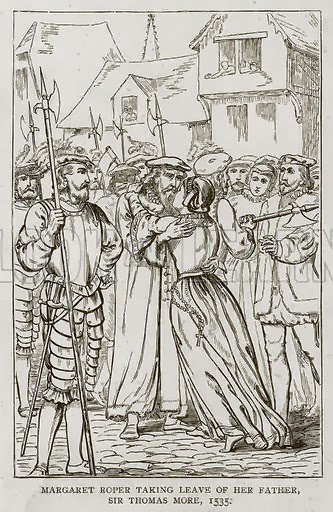
As expected, More was sentenced to die on the scaffold for his treason. Meg waited at the wharf to see him, correctly guessing they would have to bring him this way to be taken back to the Tower. When he was brought near, surrounded by armed soldiers, Meg burst through a line of guards, pushing past their halberds without a qualm. No one tried to stop her. She wept and kissed her father for the last time, and it's said the sight was so moving, the guards themselves wept.

More climbed the scaffold soon afterward, still joking. The scaffold was shoddily constructed, and so "merrily" he told the guards to help him up the stairs, but he'd shift for himself coming back down.

He said to the crowd that he died the king's good servant, but God's first. He recited a psalm, knelt and prayed. The executioner knelt in front of him and asked for forgiveness. More leaned forward and kissed him, and told the surprised executioner, 

"Pluck up thy spirits, man, and be not afraid to do thine office. I am sorry my neck is very short, therefore strike not awry for saving of thine honesty [reputation]."

More tied a handkerchief around his own eyes and laid his head upon the block. Then, he suddenly gave a signal for the headsman to wait, and moved his beard out of the way. He said what are probably the strangest last words ever spoken: "Pity that should be cut. That has not committed treason." 
After those words, the axe fell, and one of the most brilliant lights in Europe was extinguished.

More had asked that his body be given to Meg to return home for burial near his family, or at least his wife and children be permitted to be present at his burial, but neither request seems to have been honored. Instead, he was tossed into an unmarked grave in the floor of the Tower chapel. Bishop Fisher, whose sad, naked corpse had been buried first in the nearby All Hallows Barking churchyard, was exhumed and buried next to More, to prevent people from stealing bits of his body as relics.

Sanders gives a different story, claiming More (who was later sainted) performed his first miracle at this point. Meg realized she hadn't brought a winding sheet for her father, and she had no money left to buy one. Her maid convinced her to go to the shop and pretend to search her empty purse for coins. She said the shopkeeper would take pity on the daughter of Thomas More and would let her have the winding sheet on credit. Meg went into the shop as her maid suggested, but when she felt in her purse for the money, the exact amount she needed for the linen suddenly appeared.

It's a nice story, but Meg was never given the chance to give her father burial rites. His body was taken from the scaffold straight into the chapel and buried unceremoniously. Indeed, the only executed person of this period I know of that was given any sort of last decencies is Anne Boleyn, and hers were paltry at best.
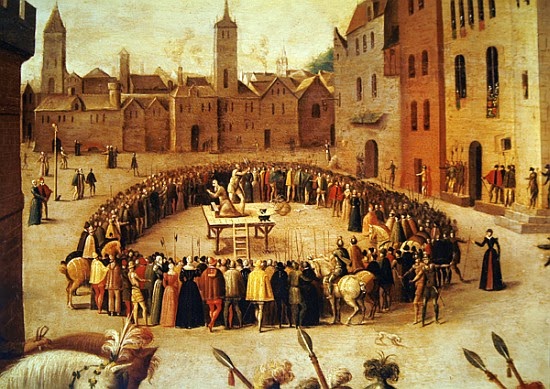
Image courtesy of Wikipedia Commons
Photographed by Relee54
The Victorian excavation of the chapel floor was unable to identify Thomas More’s remains from among the other beheaded skeletons. In the 1970s, a memorial was built to Thomas More in the chapel, through a side door, closed to the public. It’s a rectangular monument of dark marble with a bust of More on the top. Engraved on the side are the words, Knight, Scholar, Writer, Statesman. I think More would have liked it.

After his execution, More’s head was placed on a pole on Tower Bridge, as was customary. According to legend, Margaret had them row her out in a boat under her father's head and she expressed a wish it would fall down into her lap, and PLOP! down the head came. A more mundane and realistic explanation is that Meg bribed a guardsman to get it down for her. (Truth be told, the council was thinking about getting rid of it anyway, because More and Fisher's heads were drawing crowds that clogged the bridge so badly traffic could not pass. People claimed the severed heads looked more lifelike every day, and birds would not peck at them. People were beginning to see it as a divine sign, and to call the two men saints.) Meg took the head home, where she preserved it with herbs and stored it in a lead box.
The king's council found out about it and called Meg before them for "stealing" the head. She admitted to it readily, but for some reason, the council decided not to charge her with anything. She kept her father's head with her until her own death in 1544, when she was supposedly buried with it in her arms.

But the head’s journey doesn’t end there. 

In 1835, the chapel of St. Dunstan's, home of the Roper vault, was being re-paved and those delightfully ghoulish Victorians went down into the Roper vault to see if they could find the head. They discovered it not in her coffin, as was expected, but within a niche in the wall. And, apparently, they let people down inside to take a peek whenever they liked, as the following article seems to demonstrate. (Historic UK says the skull was on display for many years.) It also demonstrates the attitude Victorians had toward antiquities and how they should be "restored."


Gentleman's Magazine, March 12, 1837

"As I have observed in your excellent Magazine, that a few years ago the public had taken a deep interest in the restoration of Sir Thomas More's monument in the Church of Chelsea, the place which was destined by the excellent and amiable man for the interment of his body, but which is in fact an empty cenotaph, I trust that less will not be felt by many of your readers for the spot where his head was placed; which was obtained (after its exposure on London Bridge) by his beloved daughter Margaret, and brought to her residence in St. Dunstan's, Canterbury, and deposited, by her request, in the same vault with her after her decease.
In the chancel of the church is a vault belonging to that family, which, is newly paving of the chancel, in the summer of 1835, was accidentally opened; and, wishing to ascertain whether Sir T. More's scull was really there, I went down into the vault, and found it still remaining in the place where it was seen many years ago, in a niche in the wall, in a leaden box, something of the shape of a bee-hive, open in the front and with an iron grating before it. In this vault were five coffins, some of them belonging to the Henshaw family, one much decayed, no inscription to be traced on it. The wall in the vault, which is on the south side, and in which the scull was found, seems to have been built much later than the time of Sir T. More's decapitation, and appears to be a separation between the Roper chancel and the part under the Communion Table.
[...]
In musing over these relics of days gone by, and connected as they are both above and below ground with that simple-minded an pious martyr, I could not but feel that I was treading on religious classic ground, and hope that a similar good feeling might induce some, who venerate the great and the good of other times, to manifest the same laudable wish to save from ruin the sacred walls which contain the head, as they have done in restoring the empty monument of that excellent man. I enter con amore into restorations of this sort, I have been planning how it might be done with best effect; and it has struck me that the eastern window of the chancel might be ornamented with a copy of that beautiful bust of Sir T. More by Holbein, and in the side lights might be placed the coats of arms of the different compartments by handsome small oaken beams, might be restored, and shields placed at the intersections of the angles; and a Gothic open screen of the same wood might surround the chancel. As a finish to the whole, I would have a handsome small vase of Bethersden Marble, standing on a plain circular pillar, erected under the window; in which I would place, if it was not thought improper, the scull itself, with a suitable inscription. But the difficulty is, HOW is all this to be accomplished? I see no other possible way, than some of the descendants of Sir Thomas paying this sacred debt (may I call it?) to the memory of their great and good ancestor, or by others not connected with the family, but who take a deep interest in matters of this sort; doing, in short, as your Magazine records they have been lately been doing at Chelsea, and paying the same mark of respect to the head in St. Dunstan's church, as they have there done to his empty tomb.  

Note that the writer does not mention they were likely the one who broke open the bottom of the box to see if the "scull" was really inside. The writer partially got his wish. A nice set of stained glass windows featuring More and his family was installed, and a granite slab marking the spot of the vault was put in place in 1932, but alas, More's skull was not popped into a vase.

In 1978, the Roper vault below the church was re-opened for archeological excavation. There, they found a niche built into the brick wall with heavy bars built into the opening. Behind them was a lead box with a hole cut or broken into the side. Fragments of skull were visible through the opening, along with what appears to be white lead dust, perhaps used to whiten or preserve the skull. It’s believed this is the final resting place of the head of Thomas More.
StumbleUpon Share on Tumblr