Showing posts with label Katheryn Howard. Show all posts

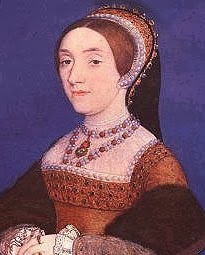
February 13, 1542: Katheryn Howard's Bloody Valentine

Seven or eight thousand people crowded the Tower green on a cold February morning. It was the day before Valentine's Day, 1542, and the people were gathering to see a rare spectacle, the execution of a Queen of England.

When Anne Boleyn was awaiting the executioner, her jailers fretted that she would declare her innocence before the crowd. To try to keep the audience small - and limit those who might be exposed to her words - they attempted some confusing tactics. This time, they had no such concerns. The young woman lodged in the royal apartments was resigned to her fate.

Katheryn and Jane Parker had been condemned by an Act of Attainder on Saturday and brought to the Tower that afternoon for execution. The stories say Katheryn struggled and cried when the council came to escort her to the Tower, and the weeping young girl had to be physically forced onto the barge.

But the following day was Sunday, a day on which an execution could not take place. They would have to wait until Monday morning. Considering the anguish she had been in since her arrest, one wonders if Katheryn was grateful for one more day of life, or if it merely added to her torment.

The curious people flooded through the gates of the Tower to watch her die. This was no innocent martyr to Henry's desires, as the people saw it. Katheryn Howard had sinned, and now she would pay for it with her life. It was the kind of execution parents loved to bring their children to, illustrating the wages of sin to impressionable young minds.

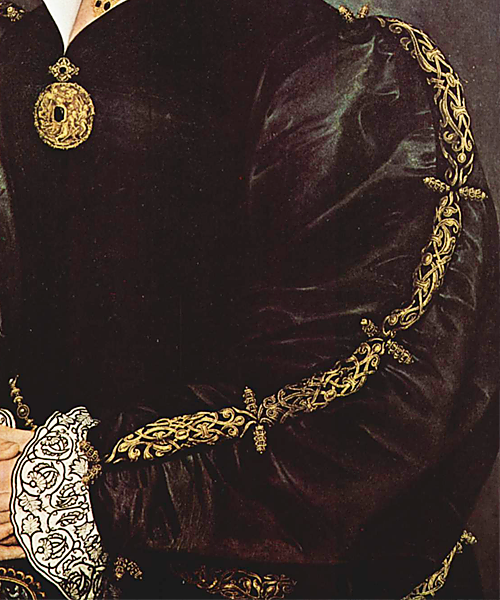
The doors to the royal apartments opened and Katheryn stepped out into the cold morning air. She was a tiny girl, plump and pretty, possibly only sixteen or seventeen years old. That morning, she wore a black velvet gown, chosen from among the six she had been allowed. Its fabric suited her rank; its color suited the solemn occasion to which she wore it.

Katheryn had been shamed before all of England. The salacious details of her pre-marital affairs had been aired to the public, all of her secrets known. They had never proved adultery, only managing to wrest a confession from Thomas Culpepper that he would sleep with the young queen if given the opportunity.

That intent was enough to condemn them.

Henry VIII alternated fits of weeping and rage at the "betrayal" of his teenaged bride, that "rose among women" whose petals had been caressed by others. When Anne had languished in the Tower, Henry had partied like a frat boy, cheerfully indifferent to his cuckold's horns, claiming openly that Anne Boleyn had slept with a hundred men.

Now, learning that Katheryn had intercourse with one man, and had been intimately touched by another before she married Henry was enough to send him screaming for a sword to kill her himself and mourning so bitterly that his council feared for him. Chapuys writes that Henry blamed his council his lamentable fate of marrying such "ill-conditioned wives." Their response to that is not recorded, but perhaps it's best left to the imagination.

In the end, Henry couldn't even bring himself to sign Katheryn's death warrant. The council had done it for him, adding The king wills it at the bottom, dubiously legal, but no one was arguing that particular point.

The men accused with her were dead already. Francis Dereham - whose only crime had been to sleep with an unmarried girl before she came to the king's attention - had suffered a horrid traitor's death of disemboweling. Thomas Culpepper, once one of Henry's favorites, was given the more merciful death of beheading. His crime had been to meet with the queen for whispered conversations and furtive exchanges of gifts.

Behind Katheryn walked Jane Parker, Lady Rochford, who had arranged these secret meetings. Both Katheryn and Culpepper had tried to put the blame squarely on her shoulders, insisting Lady Rochford had goaded them into meeting. Lady Rochford had broken down under the stress and appeared to have gone insane, but she had apparently found peace, because she walked with quiet dignity behind Katheryn as they headed to the scaffold.

They likely followed the same route as Anne Boleyn, moving from the royal apartments (marked in red) around the Jewel House and through the Coldharbour Gate (marked in green), until they reached the north corner of the White Tower. The scaffold was erected where the black X is marked on the map. The Chapel of St. Peter-ad-Vincula is indicated in blue. Today, the spot of the scaffold is where visitors to the Tower gather to see the Crown Jewels.

Katheryn had to be terrified. She was not to be granted the elegant, swift death delivered by a swordsman as her cousin had before her. No, Katheryn would bow her head to the block under the brutal blade of an axe.

Frightened she might be, but Katheryn remembered she was a Howard, and she was determined to die with dignity. The night before, she had asked her jailer, Sir John Gage, to bring the block to her chambers so she could practice laying her head on it and not fumble before the crowd. Reportedly, she asked the ladies serving her which position made for a better presentation. She may have had the hideously botched execution of Margaret Pole in mind.

She climbed the few steps of the scaffold now. It was likely the same one used for Anne Boleyn - stored away and reassembled when needed - but this time, the niceties hadn't been observed. There's no mention of the yards of expensive black velvet that had adorned the scaffold like a macabre parade float when Anne died. Anne had been an anointed Queen; Katheryn had been stripped of the rank that had been a courtesy title due to her marriage to the king and was now "merely Katheryn Howard." She had been granted her last request for a "private death" inside the walls of the Tower, but that was all.

Katheryn walked across the raw boards covered with a thick layer of straw meant to absorb her blood and faced the crowd.

She had not been raised as a courtier, and taught from birth how deal gracefully with public scrutiny as Anne Boleyn had. Katheryn was just a simple gentlewoman with scant education, and little adult supervision in her formative years. She'd only reigned as queen for one year, a position she had to learn "on the job" as it were, completely unprepared for court etiquette. Certainly, nothing in Katheryn's short life had prepared her for this. But in her last moments, Katheryn comported herself like a queen.

Some accounts say Katheryn looked pale and frightened - one says she seemed so weak that she could barely speak. The French Ambassador had written that Katheryn spent her last days in constant tears, but now she stood solemn and composed, though she could not completely conceal her fear. God knows how hard it was for her, but she did her duty, and she did it with grace and dignity.

A witness wrote of her last moments in a tone of pride, saying that Katheryn


[...] made the most godly and Christian end that ever was heard tell of (I think) since the world's creation [...]

We don't have an exact record of her words, but Katheryn said the things that were expected of a condemned traitor. They were so ordinary that no one bothered recording the exact wording, just the gist of it. She would have thought long and hard about what she would say, knowing it would be publicized far and wide, and her words could have repercussions on her family if the king was displeased by them. Katheryn praised the king for his goodness to her, confessing that she deserved death, and exhorting the people to take example from what happened to her, and amend any sin in their own lives.

When she finished speaking, Katheryn disrobed, stripping off her outer gown and sleeves. She had no jewelry to remove, it having been seized as soon as the investigation into her affairs began. But the fabric was costly and the French hood she wore had valuable gold trim. The garments would be laid aside for the executioner as part of his payment.

Unlike Anne Boleyn, there's no mention of the council buying the clothing back from the executioner, or redeeming the items Katheryn had left behind in her rooms in the royal apartments, which now belonged to John Gage. The council let both men keep their prerogatives, apparently having no concern souvenirs would be made.

Wearing only her kirtle, petticoat, and chemise in the February chill, Katheryn prayed as knelt down in the pile of straw in front of the block. Her auburn hair would have been tucked up into a white linen cap to leave her little neck bare. She laid her throat on the bare wood as she had practiced. Tradition was that the condemned would thrust out their arms as a signal that they were ready. Sometimes, a friend would take their hands and hold them stretched forward, but Katheryn's friends had been taken from her when she was brought to the Tower.

The axe rose and fell. The executioner was good - it took only one blow before Katheryn's head was severed. Anne Boleyn's ladies had rushed forward to throw a cloth over her head as soon as it left her shoulders to protect her dignity. There's no mention this was done for Katheryn.

Chapuys records that Katheryn's torso was covered by a black cloak and pulled aside for the next occupant of the block. Lady Rochford stepped forward.

Chapuys had written she had periods of lucidity during her spell of madness. The legislation passed to make it legal to execute the insane had implied Lady Rochford was faking. Either way, she was calm and dignified now, and she made a speech similar to Katheryn's before she knelt down in the bloody straw and laid her neck on the dripping block.

The witnesses all reported both women made a "goodly end." Katheryn had done her name proud in this last, as had the much maligned Lady Rochford. Later, a legend would arise that Katheryn had declared she died a queen but would rather have died as Culpepper's wife, and that Lady Rochford had said she deserved to die for lying about her husband and Anne Boleyn. Fanciful nonsense, and nothing more.

It was over. The crowd wandered away, leaving behind the two bodies which lay on the scaffold while their blood drained out through the boards, dripping onto the grass below.

Sometime later - how long the records do not say - Katheryn and Lady Rochford's bodies were  were carried to the chapel of St. Peter-ad-Vincula where Anne and George had been buried. There is no mention of them being wrapped in cerecloth - the heavy white, waxed cloth used for burial shrouds - only the black cloak with which Katheryn had been covered after death. Since the cloak was valuable and would not have been buried with her, the implication is that the bodies were put directly in the earth. I hope it is simply an omission and both Katheryn and Lady Rochford were given at least the scant courtesy of a shroud.

A few feet beneath the paving stones to the right of the altar, hasty graves were scratched out for both of them and they were buried with no marker above them.

But someone wanted nothing of Katheryn Howard to remain. Her grave was filled with lime, meant to hasten decomposition. This was - by no means - an ordinary part of the burial process. It raises the question of who gave the order and why. It seems we'll never know for certain, but there was one person who wanted to erase the "rose without a thorn" from memory.

Three hundred years passed, and the little chapel fell into a pitiful state of disrepair. Thomas Babington Macaulay, in his History of England wrote in 1848:

In truth there is no sadder spot on the earth than that little cemetery. Death is there associated, not, as in Westminster Abbey and Saint Paul's, with genius and virtue, with public veneration and with imperishable renown; not, as in our humblest churches and churchyards, with everything that is most endearing in social and domestic charities; but with whatever is darkest in human nature and in human destiny, with the savage triumph of implacable enemies, with the inconstancy, the ingratitude, the cowardice of friends, with all the miseries of fallen greatness and of blighted fame. Thither have been carried, through successive ages, by the rude hands of gaolers, without one mourner following, the bleeding relics of men who had been the captains of armies, the leaders of parties, the oracles of senates, and the ornaments of courts.

Thither was borne, before the window where Jane Grey was praying, the mangled corpse of Guilford Dudley. Edward Seymour, duke of Somerset, and protector of the realm, reposes there by the brother whom he murdered. There has mouldered away the headless trunk of John Fisher, bishop of Rochester and Cardinal of Saint Vitalis, a man worthy to have lived in a better age, and to have died in a better cause. There are laid John Dudley, duke of Northumberland, Lord High Admiral, and Thomas Cromwell, earl of Essex, Lord High Treasurer. There, too, is another Essex, on whom nature and fortune had lavished all their bounties in vain, and whom valour, grace, genius, royal favour, popular applause, conducted to an early and ignominious doom. Not far off sleep two chiefs of the great house of Howard, Thomas, fourth Duke of Norfolk, and Philip, eleventh Earl of Arundel. Here and there, among the thick graves of unquiet and aspiring statesmen, lie more delicate sufferers; Margaret of Salisbury, the last of the proud name of Plantagenet, and those two fair queens who perished by the jealous rage of Henry. Such was the dust with which the dust of Monmouth mingled.

His words helped bring the sad condition of the chapel to public attention, and soon Queen Victoria gave her permission for a restoration. She ordered that an attempt be made to identify the famous persons buried in the chapel, a task which proved more difficult than anticipated, because the tiny chapel had been in continuous use as a parish church, and there were over a thousand within its walls. The bones of a grave's prior occupant would be pushed aside to make room for another.

The bones believed to be Anne Boleyn's had been pushed aside for a lead coffin occupied by a woman who had died in 1760. In other places, the bones of unknown persons mingled with older burials.

Close by, somewhat in a south-east direction, and nearer to the wall of the chancel, gathered together in two distinct groups, were found the bones of two females; these were examined and carefully sorted, they appeared to belong to a person of about thirty to forty years of age, and to another who must have been considerably advanced in years. It is worthy of note that these latter remains were a little to the south-east of the younger female.
These groups had been much disturbed, and many bones are missing: the younger female had been of rather delicate proportions, the elder had been tall, and certainly of above average height.
These remains are believed to be those of Lady Rochford and Margaret of Clarence, Countess of Salisbury: and, as was subsequently discovered, they had been removed somewhat to the east of their original resting places, in order to make room for two unknown persons, who had been buried close to the step of the chancel, probably about one hundred years ago.

Search though they might, they found no trace of Katheryn Howard. They speculated that the lime had dissolved her young bones to dust.

No remains which could be identified as those of Queen Katharine Howard were found; it should, however, be borne in mind that lime has been most extensively used in these interments, and as Katharine Howard was only twenty years old when she was beheaded (at which age the bones have not become hard and consolidated), it is very possible that even when Judge Jeffreys was interred in the chancel, her remains had already become dust. It was at first supposed, as she had been buried on this spot, that her remains had been discovered, when the group of female bones were found lying near the Duke of Northumberland; but a closer examination showed that the age and size of the bones (Katharine Howard is said to have been very small in stature) would not support that supposition, and these are now believed to be the remains of Lady Rochford.

Only Katheryn Howard's memory remains.

History has tended to judge her harshly, and even today, she is thought of as the queen who deserved her execution, a foolish little adulteress that had the misfortune of getting caught. Even those who accept she may not have been "technically" guilty charge her with terminal stupidity in putting herself into the situation with Culpepper.

But we don't know why Katheryn chose to meet with him. Some have suggested she might have been being blackmailed to keep her past hidden. Or it could be as simple as Katheryn being a teenage girl in the throes of love who never imagined talking with a man in secrecy could get her in such dire straights.

In the end, Katheryn Howard died because she had premarital sexual experience. The king passed a law that made it treason for a woman to conceal her sexual history if the king showed interest in marrying her. The meetings with Culpepper were just icing on the proverbial cake. She died because Henry could not stand the thought of her being touched by others, and she broke his heart.

Despite her paltry education, there is evidence Katheryn tried to be a good queen to her people. She pleaded with the king for mercy towards convicted criminals. And despite her image as a silly girl only interested in fashion, one of the largest expenses on her privy purse accounts was purchasing warm clothing for the elderly Margaret Pole.

In recent years, the legacy of Anne Boleyn has begun to be re-examined. Even Lady Rochford has been the subject of new scholarship, sweeping away the layers of myth that have clung to her memory. Perhaps it's time we do the same with Katheryn Howard. StumbleUpon Share on Tumblr

Katheryn Howard Condemned to Die

image
On February 7th 1542, ambassador Eustace Chapuys reports that the ladies Katheryn Howard had been allowed to keep with her through these dark days of her arrest and imprisonment had been dismissed by Sir John Gage, the Comptroller of the Tower. The Bill of Attainder that would make her death into law was being prepared for final vote and its passage was not in question.

Attainder of Katharine Howard and others.—Katharine Howard whom the King took to wife is proved to have been not of pure and honest living before her marriage, and the fact that she has since taken to her service one Francis Dereham, the person with whom she "used that vicious life before," and has taken as chamberer a woman who was privy to her naughty life before, is proof of her will to return to her old abominable life. Also she has confederated with lady Jane Rocheford, widow, late wife of Sir Geo. Boleyn, late lord Rocheford, to "bring her vicious and abominable purpose to pass" with Thos. Culpeper, late one of the King's Privy Chamber, and has met Culpeper in "a secret and vile place," at 11 o'clock at night, and remained there with him until 3 a.m., with only "that bawd, the lady Jane Rocheford."
For these treasons, Culpeper and Dereham have been convicted and executed, and the Queen and lady Rochford stand indicted. The indictments of such as have lately suffered are hereby approved, and the said Queen and lady Rochford are, by authority of this Parliament, convicted and attainted of high treason, and shall suffer accordingly; and the said Queen, lady Rocheford, Culpeper, and Dereham shall forfeit to the Crown all possessions which they held on 25 Aug. 33 Hen. VIII.

It must have been so difficult for Katheryn to say goodbye to the last friends she had. Henry had been unusually merciful in allowing her to keep her ladies with her. They had been with her since her imprisonment at Syon Abbey in November, and though no official sentence had yet been given, they were all aware it was likely a final goodbye.

In her last days, Katheryn would be served by the wives of the officers in the Tower. They're not named in the records, and there was probably only a few of them to see to her basic needs. She was no longer a queen, and was not entitled to a household contingent of servants. She was now "merely Katheryn Howard" and would leave this world as she had come into it.

There's a tradition that there may have been some offers of clemency or mercy if Katheryn would admit to being married to Francis Dereham, but she stalwartly insisted she had never been Dereham's wife. Maybe she knew it wouldn't save her anyway. Anne Boleyn had been made a similar offer and had knelt for the sword all the same.

There seems to have been some discomfort with the idea that Katheryn was to be condemned without a chance to defend herself, which the council decided to deal with by visiting her at Syon.

Chapuys described the meeting and said that Katheryn admitted to them she was guilty and expected she would be executed. She asked that the execution be private and made two final requests.

How she conducted herself the first night in her new prison-lodging, no pen has detailed; but on the following day, the lord chancellor brought the bill to the lords, signed by the King, with the great seal appended to it; and whilst the commons were being summoned to attend, the Duke of Suffolk arose, and said that he and several others had that morning visited the Queen; that she acknowledged her offence against God, the King, and the nation, implored his Grace not to punish her brothers, or family, for her faults; and, as a last request, desired permission to divide her clothes amongst her maidens, as she had nought else to recompense their services with. The Earl of Southampton confirmed this statement, and added more which has not been entered on the journal of that day's proceedings, —the clerk, unaccountably, having began the entry with these words: hoc etiam adjidens [this too shall pass]—and added nothing more.

The Bill passed on February 11th. Katheryn Howard and Jane Parker, Lady Rochford were sentenced to death as traitors, stripped of all titles and property.

But at this very last, the king could not bring himself to actually sign the bill. His council eventually affixed the phrase, "The King wills it" - dubiously legal, but no one was arguing that point.

That very day, Katheryn and Lady Rochford were taken to the Tower to prepare for execution. We don't know how Lady Rochford reacted when she was taken from Russell House on the Strand, where she was being cared for in her mental breakdown by Anne Russell, wife of the Admiral. But the descriptions of Katheryn's move are heartbreaking.

Reportedly, a terror-stricken Katheryn struggled and cried when the council came to escort her to the Tower and to her death. Gone was the resigned, almost cheerful woman Chapuys had described, and in her place was a badly frightened teenage girl. She had to be physically forced onto the barge that would transport her by river, and sobbed during the entire journey.

It's not recorded if she looked up at the rotting heads of Dereham and Culpepper as they rowed her below London Bridge - hopefully, she didn't realize they were still there.

They probably brought Katheryn to the Byward gate, as they had done with Anne Boleyn, instead of the more public Traitor's Gate. Sir John Gage tried to be as kind as he could to the weeping young lady who stepped from the barge onto the gray stones of the Tower.

She would never leave.

Katheryn was taken to the royal apartments that had been constructed for the coronation of her cousin, Anne Boleyn. Here, too, Anne Boleyn had spent her last days. The rooms hadn't been occupied in the six years since, and were probably already beginning to show signs of neglect.

I don't know where Lady Rochford was housed, but I imagine for convenience's sake, she was housed with Katheryn. Both were technically commoners now that they had been attained and stripped of all titles and worldly goods, but they would still be treated as gentlewomen in Sir John Gage's care.

The next day was a Sunday, on which an execution could not occur. Katheryn and Lady Rochford had a day's time to prepare for death. Considering Katheryn's anguish, one wonders if she was grateful for one more day of life, or if it added to her torment.

The Bishop of London arrived, and it was likely in the chapel of the royal apartments where Katheryn quietly made her last confession. Anne Boleyn had used this occasion to help clear her name, calling her jailer to witness her swearing on the host that she was innocent of adultery. Katheryn didn't do this - she had a more unusual request in mind.

She called Sir John Gage, and asked that the block be brought to her lodgings. She wanted to practice kneeling and laying her head upon it so she wouldn't embarrass herself by fumbling it in front of the crowd.

Supposedly Katheryn asked her ladies as she practiced which position made for a better presentation.

This wasn't vanity - Katheryn was a Howard and she was determined to die with grace and dignity. She had been shamed before all of England, but in this last, she could make an honorable end. StumbleUpon Share on Tumblr

The Last Winter of Katheryn Howard

image
Katheryn Howard was doomed, and it seems she knew it.

As with much of the Tudor era, Eustace Chapuys, the Imperial ambassador, is the greatest source of information. Unlike Anne Boleyn, Chapuys didn't dislike Katheryn. She was old-school Catholic and hadn't made political waves. He was mostly indifferent to her, but as always, he reported the gossip which came his way, some of it inaccurate.

imageKatheryn was imprisoned in the old nunnery of Syon Abbey after the king learned of her pre-marital sexual experience and the fact she'd been meeting Thomas Culpepper in secret. The king gave orders that she was to be lodged "moderately" with "mean stuff" with no cloth of estate furnishing her chambers. She had been stripped of her title, so she was now a mere gentlewoman. She was given six dresses, and the orders were that none were to have jewels sewn to the fabric, though gold trim was permitted.

Katheryn, who had gone from genteel poverty to a palace, now lived in three rooms. She'd had a queenly retinue of at least thirty ladies (the standard number) but now was allowed only four women to serve her. She had been allowed to choose them - a kindness not extended to Anne Boleyn - so Katheryn at least had friendly faces around her in her darkest days.

Though her residence was likely comfortable, it was still a prison. She had no visitors other than the council members who occasionally questioned her, no letters from friends with words of comfort. Katheryn waited there to find out what the king intended to do with her.

imageOn the first of December, 1541 the indictment was introduced:
That Katharine, queen of England, formerly called Kath. Howerd, late of Lambyth, Surr., one of the daughters of lord Edmund Howard, before the marriage between the King and her, led an abominable, base, carnal, voluptuous, and vicious life, like a common harlot, with divers persons, as with Francis Derham of Lambeth and Hen. Manak of Streteham, Surr., 20 and 24 May 32 Hen. VIII., and at other times, maintaining however the outward appearance of chastity and honesty. That she led the King by word and gesture to love her and (he believing her to be pure and chaste and free from other matrimonial yoke) arrogantly coupled herself with him in marriage.
And the said Queen and Francis, being charged by divers of the King’s Council with their vicious life, could not deny it, but excused themselves by alleging that they were contracted to each other before the marriage with the King; which contract at the time of the marriage they falsely and traitorously concealed from the King, to the peril of the King and of his children to be begotten by her and the damage of the whole realm.
image And after the marriage, the said Queen and Francis, intending to renew their vicious life, 25 Aug. 33 Hen. VIII., at Pomfret, and at other times and places, practised that the said Francis should be retained in the Queen’s service; and the Queen, at Pomfret, 27 Aug. 33 Hen. VIII., did so retain the said Francis, and had him in notable favour above others, and, in her secret chamber and other suspect places, spoke with him and committed secret affairs to him both by word and writing, and for the fulfilling of their wicked and traitorous purpose, gave him divers gifts and sums of money on the 27 Aug. and at other times.
imageAlso the said Queen, not satisfied with her vicious life aforesaid, on the 29 Aug. 33 Hen. VIII., at Pomfret, and at other times and places before and after, with Thos. Culpeper, late of London, one of the gentlemen of the King’s privy chamber, falsely and traitorously held illicit meeting and conference to incite the said Culpeper to have carnal intercourse with her; and insinuated to him that she loved him above the King and all others. Similarly the said Culpeper incited the Queen. And the better and more secretly to pursue their carnal life they retained Jane lady Rochford, late wife of Sir Geo. Boleyn late lord Rochford, as a go-between to contrive meetings in the Queen’s stole chamber and other suspect places; and so the said Jane falsely and traitorously aided and abetted them.

The same day as the indictment, Culpepper and Dereham were given a perfunctory trial for treason at the Guildhall and found guilty.

The French ambassador wrote that he found it a little curious:
The personages before named were, five or six days ago, brought from the Tower into the great consistory of London, called Illehale (Guildhall), where the Mayor first, and beside him the Chancellor, Norfolk, Suffolk, and the rest of the Council, in presence of all who chose to attend, made anew the process of the said prisoners, and read aloud the Queen’s signed deposition of what she had done with Durans before marriage, and her conversations with Colpepre.
After both had been heard and examined they were condemned, Durans for having not only kept the lady from the time he violated her at the age of 13 until 18, but for having since been of her chamber and brought thither the woman who had been his accomplice before, which is presumptive evidence that they continued in their first purpose, especially as the Queen had said to lady Rochefort that if Colpepre would not listen to her there was, behind the door, another “qui ne demandoit pas meilleur party.”
Colpepre had like sentence, although he had not passed beyond words; for he confessed his intention to do so, and his confessed conversations, being held by a subject to a Queen, deserved death.
imageMany people thought the publication of these foul details strange, but the intention is to prevent it being said afterwards that they were unjustly condemned. Another strange thing has been noted, viz., that Norfolk was at the judgment, and even in examining the prisoners laughed as if he had cause to rejoice.

Francis Dereham's only crime had been to sleep with an unmarried girl long before she came to court. He and Thomas Culpepper, who had met with the queen to exchange whispers and gifts, were executed at Tyburn nine days later.

The king had once liked Thomas Culpepper, and so he extended to him the merciful death of a quick beheading. Dereham was not so fortunate. He had been the one to pluck Henry's "rose without a thorn" and the king decreed:

 As to the remission of the extremity of Deram's judgment [sentence], the King thinks he has deserved no such mercy.

Dereham suffered the full horrors of a traitor's death - a protracted, painful, and gory experience. The heads of both men were impaled on spikes on London Bridge as a warning to others.


Katheryn was probably told of the trial and execution of these men, and it probably cemented in her own mind that she would be executed as well. She remembered what had happened to her cousin.

imageThere's a story - likely apocryphal - that Katheryn was offered clemency if she would admit to being Dereham's wife, but she refused. Anne Boleyn had agreed to annul her marriage to the king. She may have believed - or was promised - she would to be sent to a nunnery instead of executed. But a few days later, she was led to the scaffold.

Likely, such an offer was never made to Katheryn. The king didn't feel he needed an annulment on top of an execution this time.

At the end of January, Chapus wrote about Katheryn's condemnation:

A few days ago the assembly of Parliament, or the States of this kingdom, began its sessions. The chief point of the Chancellor's speech relates to the Queen's misdeeds, which that official exaggerated and aggravated without measure.
After some four days' discussion, the members, lords, and prelates sitting in the said Parliament have declared the Queen, as well as Mme. de Rochefort [Jane Parker, Lady Rochford], guilty of high treason and lese Majesty. 

imageThe security at Katheryn's prison was increased, which he took to be a dire sign of things to come. Chapuys seems to have believed that Katheryn was living it up during her imprisonment. However, he had a few facts wrong:

At this very moment, whilst I am writing these lines, some one comes to tell me that this very morning the Commons have passed a similar resolution on the Queens, Mme. de Rochefort's, and the two other ladies' cases. It is, therefore, to be apprehended that the Queen will be soon taken to the Tower.
She is still in Sion House, making good cheer, fatter and handsomer than ever she was, taking great care of her person, well dressed, and much adorned [with jewels]; more imperious and commanding, and more difficult to please than she ever was when living with the King, her husband. Notwithstanding this, she believes that her end will be on the scaffold, for she owns that she has deserved death. Her only prayer is that the execution be secret, and not in public.
imagePerhaps, unless the King wishes to marry again, for which at present he shows no inclination, he may evince some commiseration towards her; perhaps, also, he may find it easy and allowable for himself to have several wives, and afterwards get rid of them by cause of adultery or in some other way, and in that case his late queen's life might be spared.
Chapuys was wrong about the jewels - they had been confiscated the day of Katheryn's arrest - and incorrect as well about her access to clothing. She may have indeed been plumper due to stress and inactivity, but from other descriptions of Katheryn's hysteria and weeping, it's difficult to imagine she was, indeed, "making good cheer" during her imprisonment.

image
The wait must have seemed endless to Katheryn, imprisoned in those three small rooms with only her friends for comfort. No mention is made of whether books were supplied to her. One would think she would have been allowed a Bible or other devotional works, but there isn't any record of it. What did she do to pass time time as the days became weeks, and the weeks became months?

Unlike Anne Boleyn, no order was given to record Katheryn's words and movements during her imprisonment, so we do not know. All we have are those glimpses in the letters of the ambassadors.

Chapuys's musings about the king's next marriage was what was on everyone's mind. Poor Katheryn was mostly an afterthought in the letters and dispatches. Everyone was wondering who would replace her. Many believed Anna von Kleefes would re-take her place as Henry's wife. Anna, smart lady that she was, pretended to be enthusiastic about the idea.

imageChapuys mentioned it on December 3rd.
It was thought that the King, who has gone sporting in the neighbourhood of this city to relieve his mind, would perhaps have gone in the direction where the lady of Cleves is, but he has taken another road, and there is no sign, as yet, of his taking her back. As Chapuys is intimate with the clerk of the Council above referred to he ventured to suggest that if the King separated from this Queen on account of her having had connection with another man before she married him, he might well have abandoned the lady of Cleves for the same cause, according to the rumour au pays de par de la; and that was not difficult to believe at her age, considering “qu'elle patrisoit (practiquoit?) ung peu en cas de vin et autres condicions,” as was sufficiently evident. This the clerk did not deny, but said he did not believe the King would take her back or marry another woman unless Parliament forced him.
image

The following day, a commoner was brought before the magistrates for saying much the same thing. (Which goes to show how pervasive court gossip was among the people.)

Jane Rattsey, examined of her words to Eliz. Bassett, viz.: “What if God worketh this work to make the lady Anne of Cleves queen again?” says it was an idle saying suggested by Bassett's praising the lady Anne and dispraising the Queen that now is. Never spoke at any other time of the lady Anne, and she thinks the King's divorce from her good. Examined why she said, “What a man is the King! How many wives will he have?” She said it upon the sudden tidings declared to her by Bassett, when she was sorry for the change and knew not so much as she knows now.

imageOthers were watching the ladies the king dined with in the evenings for any sign of interest. Thomas Wyatt's wife was one of the prospects mentioned - Wyatt had been granted some property and offices that had been seized from the doomed Culpepper.

The lady for whom he showed the greatest regard was the sister of lord Cobham, whom Wyatt sometime ago repudiated for adultery. She is a pretty young creature, with wit enough to do as badly as the others if she were to try. 

Katheryn and Lady Rochford were attained (convicted) in January.

imageAttainder of Katharine Howard and others.—Katharine Howard whom the King took to wife is proved to have been not of pure and honest living before her marriage, and the fact that she has since taken to her service one Francis Dereham, the person with whom she "used that vicious life before," and has taken as chamberer a woman who was privy to her naughty life before, is proof of her will to return to her old abominable life. Also she has confederated with lady Jane Rocheford, widow, late wife of Sir Geo. Boleyn, late lord Rocheford, to "bring her vicious and abominable purpose to pass" with Thos. Culpeper, late one of the King's Privy Chamber, and has met Culpeper in "a secret and vile place," at 11 o'clock at night, and remained there with him until 3 a.m., with only "that bawd, the lady Jane Rocheford."
For these treasons, Culpeper and Dereham have been convicted and executed, and the Queen and lady Rochford stand indicted. The indictments of such as have lately suffered are hereby approved, and the said Queen and lady Rochford are, by authority of this Parliament, convicted and attainted of high treason, and shall suffer accordingly; and the said Queen, lady Rocheford, Culpeper, and Dereham shall forfeit to the Crown all possessions which they held on 25 Aug. 33 Hen. VIII. 
image

But even as late as February 9, Chapuys was reporting that Katheryn's ultimate fate was unknown.

The Comptroller is then to take the Queen to his own lodging, that is to say, to the Tower, of which he is governor. No final determination has yet been come to about her fate, but in two or three days it will be known.

Indeed ... it would.


StumbleUpon Share on Tumblr

The Fall of Katheryn Howard


In early November of 1541, the king was passed a note after mass. His councilors were so afraid of his reaction to its contents that they couldn't bring themselves to inform him in person.

Unlike Anne Boleyn, when Henry was told that Katheryn might be having an affair, he said the matter "might be forged," and demanded an investigation into the matter. He was troubled, but did not denounce his young queen and send her to the Tower.

Henry had married Katheryn Howard on July 28, 1540. He called her his Rose Without A Thorn. Katheryn was very young, possibly only sixteen or seventeen when she married the king. But Henry's rose had lived a very eventful life before she came to the king's attention as a lady in waiting for the wife he would soon divorce, Anna von Kleefes.

Katheryn had been raised by her grandmother, the Dowager Duchess of Norfolk, Agnes Tilney Howard. The Dowager Duchess ran something like a boarding school for young, aristocratic women. They lived in a dormitory-style room, and were given the usual education of a Tudor girl of gentle birth: dancing, music, reading and writing. However, the supervision of these young ladies seems to have been somewhat lax.

In about 1535, the Dowager Duchess hired Henry Mannox to teach Katheryn to play the virginals. Katheryn could have been no more than twelve or thirteen at this time, which today would put the entire situation in a different light. But in those days, Katheryn was considered a woman, old enough to marry. (King Henry's grandmother, Margaret Beaufort, had her first - and only - child at age thirteen.)

Mannox later said he fell in love with the young Katheryn, and she returned his affections. Their budding relationship - if you wish to call it that - moved to the physical when Katheryn "suffered" him to touch the intimate parts of her body. Mannox bragged about it - crudely - to Mary Hall:

“I know her well enough, for I have [touched her intimately] and I know [her body] among a hundred… And she loves me and I love her, and she hath said to me that I shall have her maidenhead, though it be painful to her, and not doubting but I will be good to her hereafter.”

Mannox also claimed he knew of a mark on her private parts, but was adamant in his later testimony that they had never had full sexual relations.

The affair was discovered by the Dowager Duchess when she caught the two alone together. It's mentioned in the trial records that she slapped Katheryn two or three times and ordered her never to be alone with the music teacher again.

In 1538, Francis Dereham came to serve at the Dowager Duchess's household. Along with other young gentlemen, he would sneak into the maidens' dormitory, aided by Katheryn, who crept into the Dowager Duchess's chamber and stole the keys. The young men brought fruit and wine "and other things to make good cheer."

There was a marked difference between Katheryn's affair with Mannox and the one she had with Dereham. They called one another "husband" and "wife" during these meetings. The other girls testified to witnessing the physical consummation. According to church and civil law, the pair were legally married. Katheryn was even tasked with holding money for him when he was away on business.

These meetings came to an abrupt halt when a jealous Mannox wrote a letter to the Dowager Duchess, telling her that she would be "displeased" if she visited the maiden's chamber late at night. Agnes stormed in one evening. What punishment the Dowager Duchess meted out to the girls is not recorded, but an angry Katheryn stole the letter and showed it to Dereham. Dereham confronted Mannox about it and called him a knave.

Katheryn said in her confession that the affair with Dereham ended about a year before her appointment to serve the new queen, Anna von Kleefes, as a lady in waiting. The Dowager Duchess must have sighed with relief to have her difficult charge off her hands.

While she was at court, Katheryn may have begun a flirtation with a young courtier, a favorite of King Henry. His name was Thomas Culpepper, and he was Katheryn's seventh cousin.

Culpepper was said to be very handsome and charming. Henry appointed Culpepper as a groom of the bedchamber around 1535, during the reign of Anne Boleyn. Culpepper helped to dress the king, and slept in the king's bedchamber.

It's possible that Culpepper had a darker side. Records indicate that a Thomas Culpepper was pardoned by the king for raping a park keeper's wife and slaying a man who tried to rescue her. However, Culpepper had an older brother who was also named Thomas Culpepper, so it can't be said for certain which brother it was.

Culpepper was one of the men sent to fetch the king's new bride, Anna von Kleefes. The king was unhappy in the marriage from the start and his roving eyes turned to one of her ladies, the young, pretty Katheryn. Soon, Anna was sent away with an annulment in hand, and Henry married Katheryn only eighteen days later.

At this point in his life, Henry was obese, and had a festering leg wound that wouldn't heal. By the standards of his day, he was an old man. Not exactly the man of Katheryn's dreams, but she was a Howard girl, and the duty of every young woman of the day was to marry well and bring honor to her family. The Howards seem not to have known about - or decided to deny - her marriage to Dereham, and Katheryn didn't tell the king about it when he approached her. Instead of being married off to some minor courtier due to her sullied reputation, Katheryn was climbing to impossible heights. In retrospect, she seems to have been doomed to fall.

On August 8, 1540, Katheryn Howard was presented as queen to the court. Henry lavished gifts on his young bride, whom he called "the very jewel of womanhood." His records indicate he spent more on her than he had on any of his previous queens, though Katheryn was only his wife for a short eighteen months.

But Katheryn's past quickly came back to haunt her. Francis Dereham appeared, perhaps sent by the Dowager Duchess, to ask for an appointment to court. Katheryn made him her secretary. Was she being blackmailed? We don't know, but it doesn't seem like she was happy with the arrangement. Dereham quickly became jealous of Culpepper, whom he said had succeeded him in Katheryn's affections.

Culpepper, too, was seething. The Spanish Chronicle states Culpepper was so grieved over Katheryn's marriage to the king that he fell ill over it. He sighed and cast longing looks at her when he was in her presence.

Katheryn wrote him a letter, delivered to him by Jane Parker, Lady Rochford. It's the only letter of hers that survives, and it was included in the evidence against her when the allegations of adultery came to light.

Jane Parker was the former sister-in-law of Anne Boleyn. She is traditionally blamed as being the one who condemned her husband and Anne to the scaffold by accusing them of incest, but there's no proof of her involvement in those particular accusations.

Jane Parker assisted the young queen in sending Culpepper messages and small gifts. She even arranged a few short meetings in her own bedchamber and an empty room. She scouted out locations for these meetings and reported to the queen where the back stairs could be found. It was later said she did these things in exchange for Katheryn finding her a new husband. But we cannot be sure of her motives.

There have been various theories down through the ages as to why Katheryn continued to meet with Culpepper after she married the king. Some suspect he was blackmailing her to remain silent about her past, or that Culpepper was trying to manipulate the young queen.

Perhaps it really was love. Katheryn does seem to have retained some affection for Culpepper because she referred to him at one time as her "sweet little fool," and her letter to him bemoans the fate she has that she cannot always be in his company.

The investigation quickly uncovered Katheryn's past and present entanglements. By the sixth of November, Katheryn knew she was in serious trouble. The council had been questioning her ladies and past acquaintances, and by now, the king knew all of the allegations against his thornless rose had not been "forged" after all. He abruptly left Hampton Court - Katheryn never saw him again. The following day, her jewels were seized, and Katheryn went into hysterics when Cranmer tried to question her.

I found her in such lamentation and heaviness, as I never saw no creature; so that it would have pitied any man’s heart in the world to have looked upon her: and in that vehement rage she continued, as they informed me which be about her, from my departure from her unto my return again.

He returned the next day and found her calmer and more cooperative. She made a humble confession in a letter written to the king, laying out her pre-marital affairs in detail. She begged for mercy.


But mercy was in short supply. The king was in an anguished rage, alternately roaring and crying. His reaction is a sharp difference from his cheerful demeanor after the accusations against Anne Boleyn. 

 Chapuys wrote:

"This King has wonderfully felt the case of the Queen, his wife... He has certainly shown greater sorrow and regret at her loss than at the faults, loss or divorce of his preceding wives."

The king ordered the Dowager Duchess imprisoned. Dereham and Culpepper went to the Tower. On the 11th, Katheryn was moved from Hampton Court to Syon Abbey. The king ordered her living conditions to be sharply reduced from what she was used to as queen. She had only six servants, and since her jewels had been seized, the only adornment she was allowed was a few hoods with gold trim, and six gowns.


“First, the King’s pleasure is, that the Queen, with convenient diligence, remove to the house of Syon, there to remain, till the matter be further ordered, in the state of a Queen, furnished moderately, as her life and conditions have deserved; that is to say, with the furniture of three chambers hanged with mean stuff, without any cloth of estate.”

She admitted in the interrogation that she had given Culpepper a cap with gold aglets and a chain. Norfolk wrote in his report:

She says that my Lady Rochford would at every lodging search the back doors & tell her of them if there were any, unasked; and since the progress she told her that when she came to Greenwich she knew an old kitchen where she might well speak with him. 


Katheryn paints Jane Parker as not only participating, but actively urging Katheryn to meet with Culpepper.
Culpepper tried to blame her too:

Lady Rochford contrived these interviews. The Queen would “in every house seek for the back doors and back stairs herself.” At Pomfret she feared the King had set watch at the back door, and lady Rochford made her servant watch in the court to see if that were so. [...] Lady Rochford provoked him much to love the Queen [ ...]

Jane, for her part, confessed that she believed Culpepper and the queen had been intimate.

Since her trouble the Queen has daily asked for Culpeper, saying that if that matter came not out she feared not. At Lincoln, when the Queen was with Culpeper, she was asleep until the Queen called her to answer Lovekyn. She thinks Culpeper has known the Queen carnally.

Why did Jane say that? Neither Katheryn or Culpepper ever admitted to a physical relationship. Such a thing would have been nearly impossible, given the brief, furtive nature of their stolen moments together. A queen was too closely watched by her ladies in waiting to escape them long. It was only because of the comparatively lax standards of a royal progress - most of the court had been dismissed while the king and queen were traveling - that the meetings were even possible. A whispered conversation behind a door, or a few minutes in an empty chamber was all they were ever able to have. But, in the end, it was enough to destroy them both.

Thomas Culpepper said that Katheryn had an almost superstitious fear of her husband's power as head of the church. She told him to not mention her in the confessional, lest the king hear it. God knows what pressures they put on Culpepper to confess. They likely didn't physically torture him, because of his noble blood, but it's certain his interrogation was heated. Culpepper ultimately confessed: 


"he intended and meant to do ill with the Queen and that in like wise the Queen so minded to do with him.”

That was enough to seal their doom as traitors.

On the 13th of November, the queen's household was dissolved, a very final and definitive gesture. The short reign of Katheryn Howard was over, one way or the other.

On the 22nd of November, the council decided it had enough evidence of the queen's guilt. They had spoken to Katheryn's roommates at the Dowager Duchess's house, Mannox, and Culpepper. They had found the letter Katheryn wrote to Culpepper. And Katheryn herself had written a confession of being what the king of France called "wondrous naughty."

The Duke of Norfolk, uncle of Katheryn and of Anne Boleyn, read the formal charges to her at Syon Abbey:

"My Lady Katheryn Howard. You have been charged with treason. The grounds for this charge is that you entered into marriage with His Royal Highness, King Henry VIII having knowledge of a previous betrothal to both Henry Mannox and Francis Dereham. It is also stated that you employed these persons, here at the Palace, with the full intention of continuing this sordid lifestyle. You have, not only brought shame upon your name, but have grievously sought to destroy His Majesty the King. It will be in your best interest to admit to these crimes and plead for his mercy."
Katheryn, displaying remarkable dignity for one so young, and under such terrible stress, replied:

"I am innocent of all charges and will never admit to these lies. If there is any ground of truth in these statements, then it is because of childish ignorance and the evil companions with whom I was formally surrounded. I also seek to state, that I am faithful to the King and would never wish harm upon him. I will seek his mercy, but not by admitting to these treacherous lies."


Katheryn would not admit she and Dereham had been pre-contracted or married. Maybe she knew it wouldn't save her anyway, even if she did admit to it. After all, her cousin, Anne Boleyn, had admitted to a pre-contract which allowed the king to annul their marriage, and was still beheaded a few days later. As it turned out, her cooperation was not required. Later that day, it was announced:


"[Katheryn] had forfeited her honour and should be proceeded against by law, and was henceforth to be named no longer Queen, but only Katheryn Howard."


On the first of December, Katheryn Howard was indicted:

That Katharine, queen of England, formerly called Kath. Howerd, late of Lambyth, Surr., one of the daughters of lord Edmund Howard, before the marriage between the King and her, led an abominable, base, carnal, voluptuous, and vicious life, like a common harlot, with divers persons, as with Francis Derham of Lambeth and Hen. Manak of Streteham, Surr., 20 and 24 May 32 Hen. VIII., and at other times, maintaining however the outward appearance of chastity and honesty. That she led the King by word and gesture to love her and (he believing her to be pure and chaste and free from other matrimonial yoke) arrogantly coupled herself with him in marriage.
And the said Queen and Francis, being charged by divers of the King's Council with their vicious life, could not deny it, but excused themselves by alleging that they were contracted to each other before the marriage with the King; which contract at the time of the marriage they falsely and traitorously concealed from the King, to the peril of the King and of his children to be begotten by her and the damage of the whole realm.
And after the marriage, the said Queen and Francis, intending to renew their vicious life, 25 Aug. 33 Hen. VIII., at Pomfret, and at other times and places, practised that the said Francis should be retained in the Queen's service; and the Queen, at Pomfret, 27 Aug. 33 Hen. VIII., did so retain the said Francis, and had him in notable favour above others, and, in her secret chamber and other suspect places, spoke with him and committed secret affairs to him both by word and writing, and for the fulfilling of their wicked and traitorous purpose, gave him divers gifts and sums of money on the 27 Aug. and at other times.
Also the said Queen, not satisfied with her vicious life aforesaid, on the 29 Aug. 33 Hen. VIII., at Pomfret, and at other times and places before and after, with Thos. Culpeper, late of London, one of the gentlemen of the King's privy chamber, falsely and traitorously held illicit meeting and conference to incite the said Culpeper to have carnal intercourse with her; and insinuated to him that she loved him above the King and all others. Similarly the said Culpeper incited the Queen. And the better and more secretly to pursue their carnal life they retained Jane lady Rochford, late wife of Sir Geo. Boleyn late lord Rochford, as a go-between to contrive meetings in the Queen's stole chamber and other suspect places; and so the said Jane falsely and traitorously aided and abetted them.

The same day, Culpepper and Dereham were tried for treason at the Guildhall and found guilty. The French ambassador wrote that he found it a little curious:


The personages before named were, five or six days ago, brought from the Tower into the great consistory of London, called Illehale(Guildhall), where the Mayor first, and beside him the Chancellor, Norfolk, Suffolk, and the rest of the Council, in presence of all who chose to attend, made anew the process of the said prisoners, and read aloud the Queen's signed deposition of what she had done with Durans before marriage, and her conversations with Colpepre. After both had been heard and examined they were condemned, Durans for having not only kept the lady from the time he violated her at the age of 13 until 18, but for having since been of her chamber and brought thither the woman who had been his accomplice before, which is presumptive evidence that they continued in their first purpose, especially as the Queen had said to lady Rochefort that if Colpepre would not listen to her there was, behind the door, another “qui ne demandoit pas meilleur party.” Colpepre had like sentence, although he had not passed beyond words; for he confessed his intention to do so, and his confessed conversations, being held by a subject to a Queen, deserved death.
Many people thought the publication of these foul details strange, but the intention is to prevent it being said afterwards that they were unjustly condemned. Another strange thing has been noted, viz., that Norfolk was at the judgment, and even in examining the prisoners laughed as if he had cause to rejoice.


Nine days later, Culpepper and Dereham met their end at the hands of the executioner. Culpepper, as a noble, was sentenced to simple beheading. He made a simple speech, repenting of his sins, and then knelt before the block. It was over in a moment.

As a commoner, Dereham was subject to the full horrors of a traitor's death. He was hanged until he was half-dead from strangulation, then cut down. His stomach was then sliced open, his entrails scooped out and thrown onto a bed of coals. Only after this agony was he beheaded. His body was then chopped into quarters, his head mounted beside Culpepper's on the Tower bridge, as a warning to others.

At some point, the king decided there would be no trial for Katheryn. She would be condemned by Bill of Attainder, which was introduced to Parliament on the 21st of January. It passed on February 11, and Katheryn's death was made law. It included what is probably one of the more unusual laws ever passed:


AND furthermore be it enacted for evading of such like heinous and abominable treasons, in case it fortune either the King our Sovereign Lord that now is or any of his successors hereafter being King of England, should take a fancy to any woman, of what estate degree or condition soever she be, either subject or resident within his Dominions or Realms, in way of Marriage, thinking and esteeming her a pure and clean maid, when indeed the proof may or after shall appear contrary either by due testimony or confession of the party or parties, and yet she nevertheless willingly do couple herself with her Sovereign Lord and King in marriage, without plain declaration before of her unchaste life unto his Majesty, that then every such offence shall be deemed and adjudged High Treason; and therein convicted by the Law shall have and suffer such pains of death, losses and forfeitures of land, tenants, goods, chattels, and debtors, as in cases of High Treason.


It continued that anyone knowing of unchaste behavior by the woman had to report it within twenty days of the marriage, or be guilty of misprison of treason.

Following it was a change to the law which allowed the king to execute insane persons; Jane Parker appeared to have gone mad, but she seems to have recovered before the end.

On February 10, one day before the bill became law, Katheryn and Jane were taken to the Tower. Reportedly, Katheryn struggled when she realized where they were taking her, but they forced her onto the boat. They would have floated down the Thames beneath the bridge where the heads of Culpepper and Dereham were impaled.

Katheryn was met at the Tower by her jailer, Sir John Gage. The previous man to occupy his position, Sir William Kingston, who tended Anne Boleyn before her execution, had died. Gage seems to have been of a kind temperament, because he treated the sobbing young Katheryn with every courtesy. He took her to the luxurious royal apartments, where Anne had been imprisoned. No trace of these buildings remain today.

A bishop came to take her confession. Unlike Anne Boleyn, Katheryn did not call an audience to witness her swearing she was innocent. She met with him in secrecy and quietly made her shrift. Unlike Anne, she was not to have a long time to stay within the Tower walls; she was told to prepare for death almost immediately.

As young as she was, and as foolish as she had been, Katheryn remembered she was a Howard. The only thing she had left was her dignity, and she was determined to make a good death.

She asked Gage to bring the block to her chamber so she could practice laying her head on it. Unlike Anne Boleyn, no graceful sword would take her head. She would bow before the brutal blow of the axe like any other traitor. One wonders if she had in mind the horribly botched execution of Margaret Pole, the Countess of Salisbury on her mind as she practiced.

Even at this late hour, Henry couldn't bring himself to sign the death warrant. His council did it for him, attaching his seal and the phrase, "The king wills it," in French. Once again, the difference in his behavior in this situation and that of Anne Boleyn is chillingly telling.

On February 13, Katheryn and Jane Parker were led from their lodgings to the scaffold. Even more people surrounded the scaffold than had been present at Anne Boleyn's execution: some sources say seven or eight thousand people came to witness. Katheryn is recorded as having looked pale and frightened, but she did her name proud.

She gave the traditional speech deploring her sins and praising the king, though we don't have the exact wording of it. The legend that she said she would rather die the wife of Culpepper than the queen is false - as is the legend that Jane Parker confessed she deserved to die for lying about her husband and Anne Boleyn. Both women said the conventional things and then laid their heads upon the block.

Katheryn went first, and with one blow of the axe, the life of the teenaged queen was over. Jane Parker laid her throat on the blood-covered block and died instantly, as well.

Neither was given even the scant dignity of the elm chest in which Anne Boleyn's remains were placed. They were simply wrapped in cerecloth, after their clothing was stripped as a tip for the executioner, and buried beneath the chapel floor in St. Peter-ad-Vincula.

When the chapel was renovated in the Victorian era, they searched for Katheryn Howard's remains. Nothing was found in the place they believed she was buried, and they theorized that her young, soft bones had decayed away into the soil. They also reported finding lime in the area of her grave, meant to hasten decomposition. It seems someone hoped there would be nothing left of Katheryn Howard.

Bones were discovered where Jane Parker was believed to be buried. Some writers believe that Jane's bones were actually those of Anne Boleyn, but unless the crypt is re-opened for DNA tests, it's unlikely we'll ever know for sure.
StumbleUpon Share on Tumblr